Image Map
Showing posts with label citrus. Show all posts

Thursday, April 13, 2017

Pink Peppercorn Lemonade Macarons

My maternal grandfather passed away a year and a half ago.

He was the one person in my family that had never criticized or questioned where I was going in life, besides my paternal grandfather. 

Through every drama-queen fit of histrionics, normal teenage angst--oh hell, even when I shat my pants when I was around four and started bawling, he would figuratively kick my ass and then pick me back up.

When I got diagnosed with severe clinical depression at only twelve years old, he was there for me. When I dropped out of college, he was there for me.

Even though he provided the money for my college education and my withdrawal wasted a great deal of his hard-earned money, he said nothing besides reassuring me he knew I was going to go on to do great things, no matter what, and he'd always be in my corner.

His quiet, unassuming confidence in me is something I find unbearable when I'm depressed. How could I ever live up to his expectations of me? I can't even put the right words to paper (or in this less romantic digital age--fingers to keyboard) to properly describe this man, let alone accomplish anything worthwhile or lasting.

My paternal grandfather passed away a couple of months ago.

Monday, September 12, 2016

Adventures in Japan: Beppu and Yufuin!

Beppu and Yufuin are both resort towns in the Oita prefecture in Kyushu. We stopped at both along our way back from Yawatahama back to Fukuoka.

Beppu and Yufuin are both famous for their onsens, but the Eight Hells of Beppu (別府の地獄), where you can see plumes of steam rising was quite the impressive sight! Even when driving around we could see plumes of steam rising around the city. It was very eerie as it looked like the whole place was about to go up in a volcano.

Check out the steam plumes!
After leaving Yawatahama (I fell asleep on the ferry back, it was a very long day), we arrived in Beppu to spend the night at the Umine hotel in Beppu. Our relatives wanted us to try the onsen hot springs that Beppu is famous for, but worried that we would balk about getting naked in a public onsen. So instead, this hotel had a private onsen bath with an ocean view in our hotel room! The hot spring water is piped into an outdoor patio for private enjoyment without having to even leave your room.

Sunday, September 11, 2016

Tenjosajiki Cafe (天井桟敷)

After leaving Beppu, we drove up and down mountains to reach Yufuin. We stopped by Yufuin on our way back to Yawatahama for a quick visit so our relatives could show us more of Kyushu.

While in Yufuin, we stopped by Kamenoi Bessou (亀の井別荘) a ryokan (inn) that included hot springs, a wonderful souvenir shop, and a restaurant space upstairs that was a cafe during the day and a bar after 7pm, called Tenjosajiki Cafe and transforming into Yamaneko (山猫) at night.

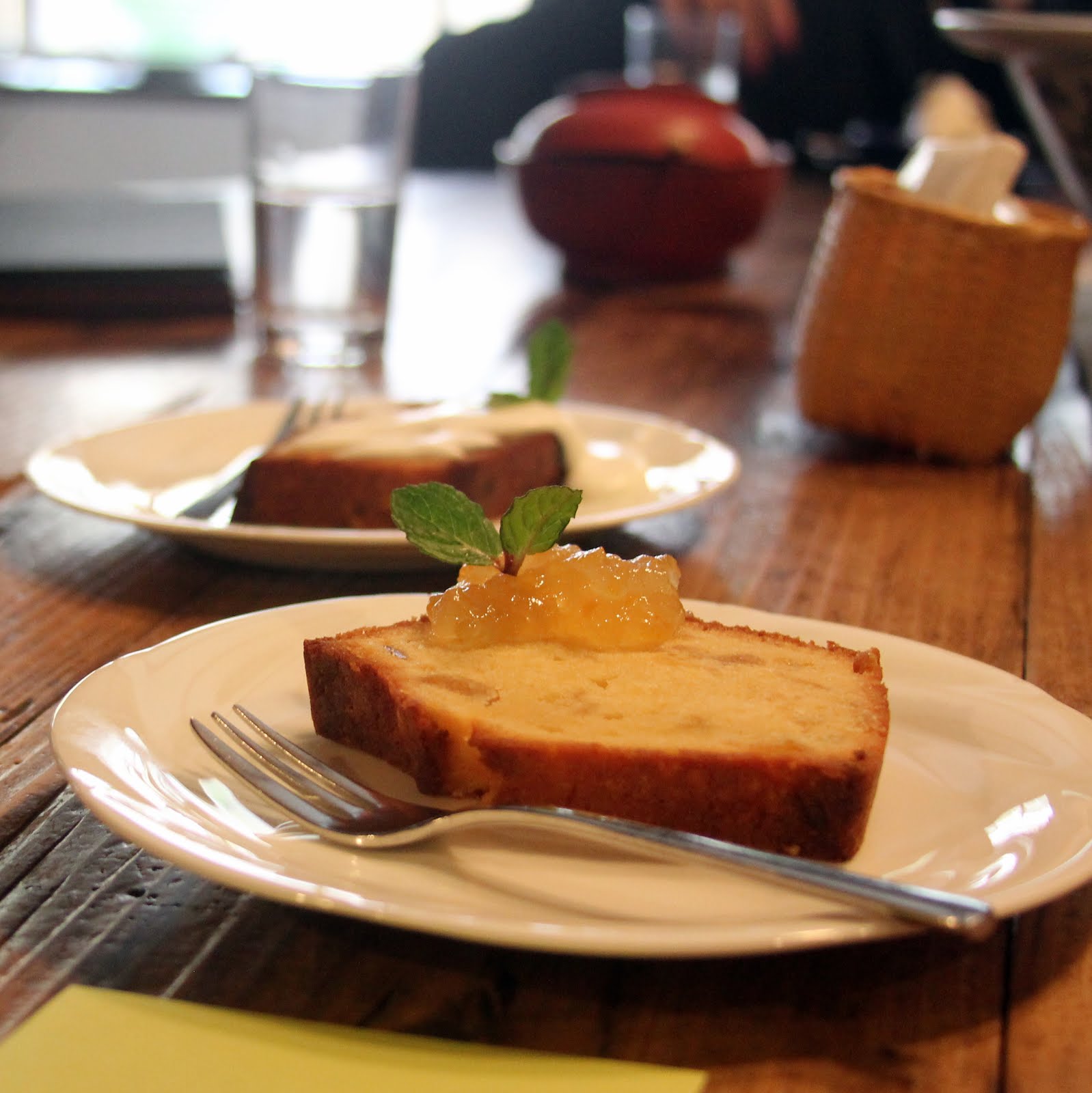
The ume pound cake
We picked up some citrus jam from the ryokan shop and ate it with toast all throughout our trip. It was less like a kitschy American souvenir shop and more like a luxury specialty shop that focused exclusively on regional and seasonal items. I loved browsing through there!

And stepping outside to take in the greenery surrounding this ryokan was magical: the mists swirled around lush greenery, cherry blossoms, and leafy trees. For a Southern California resident used to nothing but drought, it was truly like being transported to a magical forest.

Sunday, August 21, 2016

Amalfi (アマルフィ)

Before paying our respects at our family grave site and visiting the local temple in Yawatahama, my relatives in Japan took my brother, mother, and I to an Italian restaurant in the heart of Yawatahama called Amalfi. I wanted to share this experience with you as our meal showcased not only the Japanese's twist on Italian food, but also some of the local ingredients of Shikoku. Their attention to detail and ability to express a lot of flavor in small portion sizes were two things I was very impressed with.

Despite it being the lunch hour, our meal was a multi-course extravaganza. I think a lot of restaurants back in the states could learn a thing or two about portion control from places in Japan like Amalfi. This was a five course meal that managed to stay light!

We started out with an amuse-bouche of a warm potato cream soup with a thin savory crisp skewered on top with a side of a house parmesan cream cheese. The potato soup was pleasantly creamy and without any sort of graininess that sometimes happens with potato soup. I was impressed with how they managed to serve it piping hot as I've had amuse-bouches arrive lukewarm by the time they are done plating, and all of ours arrived at once. There was not a large staff by any means, so that meant they worked like lightning!

Sunday, July 31, 2016

Yuzu Kosho Bloody Mary

I love a good Blood Mary. The often spicy tomato juice, the inventive garnishes, the endless variations, the fact it's socially acceptable to drink one any time of the day: there's nothing about it I don't love.

The Bloody Mary in recent years is enjoying a lot of popularity due to the gastropub's love of garnishing it with insanity. These are cocktails meant for Instagram: garnished with burgers, pizza slices, pickles, peppers, cheese, onion rings, french fries, even a whole fried chicken at one establishment. Check out this one from Wisconsin that may be the craziest I've ever seen.


So with a storied history of people fucking around with it, I thought the Bloody Mary could stand if I decided to create my own Bloody Mary with a hapa twist!

Considering that Worcestershire sauce, lemon, and salt are three main ingredients of a classic Bloody Mary, the taste profile isn't too different but still distinctly Japanese American. In my version, the tonkatsu adds a subtle sweetness and twang, the yuzu kosho brings the citrus heat, and of course I had to have some insane garnishes.

In keeping with the hapa theme, I garnished this one with Japanese tsukemono pickles, a SPAM musubi, a chicken katsu musubi, a crab Rangoon, and a celery stick to keep everything healthy.

Monday, July 25, 2016

Mizuna, Apple and Jicama Salad with Yuzu Kosho Vinaigrette

I don't post a lot of salad recipes. They generally aren't my favorite thing, especially when the lettuce leaves are huge and they end up slapping me in the chin and I get salad dressing everywhere and look like an idiot. I never claimed to be graceful, in fact I'm pretty much a walking disaster when it comes to food and a lot of other things now that I ponder it.

I've written about the chaos that ensues while making dishes, but I'm also a natural disaster whilst dining as well. Spaghetti and salads made with lettuce are a sure-fire way to ruin a blouse in my book. I rarely disappoint when it comes to this splattering, despite being a slow and careful eater. This trait seems to be genetic, as my father tends to involuntarily decorate his button-downs as well.

However, here's a salad that I'd be willing to wear white silk around because mizuna isn't nearly as ungainly on a fork as romaine or butter lettuce, especially when you chop it down to size. I mean, don't get me wrong, if anyone can make a mess of things it's me, but I'd at least take that challenge. My only other beef about salads: their names are often unwieldy as hell!

Yuzu Kosho

Yuzu Kosho is a powerhouse condiment and another specialty of Kyushu I wanted to share with you. A simple but inspired paste of yuzu zest, chili peppers, and salt, there are two types depending on whether red or green chili peppers were used.

My mother, who by the way I just realized doesn't have a nickname (Mama Mochi?), really fell in love with this condiment when we were served it with a hot pot dish. Being served as a condiment for nabemono, or hot pot cooking, is definitely the most traditional usage for yuzu kosho, but it is versatile and especially delicious as an ingredient in sauces for grilled meats or even salads.

As stated above, there are two types of yuzu kosho: green (ao) and red (aka). I happen to think the green is a bit sharper than the red, but I urge you to try them both and draw your own conclusions, as there doesn't seem to be a consensus on the difference between the two besides color. Both of them are a magical mixture of floral, spicy, citrusy notes that make wonder why every culture doesn't have a chili citrus paste in its repertoire.

Yuzu kosho is sold in very tiny quantities normally
This is a condiment that still isn't widely seen outside of hot pot restaurants, but it is having its moment, with publications like Bon Appetit and Saveur both publishing articles extolling its virtues with recipes in tow.

You'll find it at any well-stocked Japanese market, but it might take a bit of searching as it is generally purchased in a tiny little jar the photo on the right. This paste is normally dabbed on pieces of simmered hot pot ingredients, however it can be thinned and used to brighten up sauces or included in a marinade.

Marinate and grill a steak with it, make a spicy fresh vinaigrette, top fresh grilled seafood with it, spice up your noodles dishes, this condiment is so enlivening to so many dishes apparently it has even made its way into the arena of desserts!

Here's a list of recipes that include yuzu kosho on this site:
Mizuna, Apple, and Jicama salad with Yuzu Kosho Vinaigrette
Negima Nabe
Yudofu
Yuzu Kosho Bloody Mary

Wednesday, May 14, 2014

Kumquat Tofu Cheesecake

I'm sad winter is over and spring is soon to follow. I love winter because it means our citrus trees start producing, and from winter to the start of spring we get our crop of kumquats, oranges, and tangelos. This year, some unseasonable winds knocked down what remained of our kumquat crop, so I'm glad I got to make this cake for my mother's birthday before that happened!

Don't let the name scare you, this tofu cheesecake isn't a health food. However, it retains that creaminess that you love about cheesecake, while boasting a lot more protein than a traditional cheesecake. I bet you if you chose to stay mum about the fact it was packed with protein, your guests wouldn't even know it had tofu in it. It's also a bake-free cheesecake, which is great since we are having a serious heat wave here in Southern California.

If you don't have access to kumquats, you could serve this with no topping at all, or any fresh fruit that you choose. I think blueberries, strawberries, or raspberries would be a great topping choice! Of course, if you have any jars of kinkan no kanroni in your cupboard, you're good to go.

This recipe is adapted from recipes who use the metric system and different size cups, so while I converted the recipe, I also included some weights where applicable because it's more accurate.

Tuesday, January 21, 2014

Reito Mikan (冷凍みかん)

Exciting news! I am visiting Japan this spring! I can't wait to share the experience on my blog! This is my first time visiting, so I am absolutely thrilled to finally be going! It's going to be a bit of a budget trip, so expect a lot of pictures of 7-11 bento boxes.

One of the places I will be visiting is my family's ancestral home on Shikoku (四国). Shikoku is the smallest of the four major islands of Japan, and is considered the most rural. Most tourists never set foot there, I guess you could say it's kinda like visiting Wyoming instead of New York here in the states.

Within Shikoku, I will be heading specifically to Ehime Prefecture's Yawatahama city. Ehime Prefecture (愛媛県) is the largest producer of citrus in Japan and Yawatahama (八幡浜市) is especially known for its citrus as well as its harbor.

Shikoku island in brown*
I find it slightly hilarious that my Japanese side of the family lives there, since I hail from Orange County, CA and grew up surrounded by a citrus grove.

One of their biggest crops is mikan (蜜柑 or みかん) also known as the satsuma mandarin. These diminutive fruits resemble clementines (marketed here as "Cuties") in their small size, but their bumpy loose skin with large pores make the mikan look more rustic. I love these seedless wonders, especially their lack of pith and easy-to-peel skin.

So until I finally set foot in the Land of the Rising Sun, I'll be trying to share some Shikoku specialties! First up is a fun quick snack, reito/reitou mikan, which is actually popular all over Japan. There's even a crazy song about reito mikan.

Wednesday, May 8, 2013

Smoked Salmon Crostini

I don't do a lot of entertaining, but when I do, it usually consists of finger foods and tea sandwiches. I love tea parties. Even more than tea parties, I love salmon.

My mother has always championed the healthiness of sustainably farmed salmon, and she served it so much my brother and I would complain as teenagers. Yes, we were spoiled brats. Now, being a terribly poor early-20's girl with her own place, I dream of salmon yet rarely buy it. So when I threw my party recently as mentioned in the previous post, I used it as an excuse to gorge on smoked salmon.
Like my caprese skewers, this is more about assembly than any other cooking skill. I've made these before, but this time I worked a little more on presentation and made roses out of the cucumber. It's a really quick step, but obviously they taste great either way.

As an alternative to crostini, you could even just take plain white bread, cut into squares without the crust, lightly butter to keep them from getting soggy, and make attractive open-faced tea sandwiches instead!

Thursday, March 21, 2013

Kinkan No Kanroni (金柑の甘露煮)

We are reaching the end of prime citrus season, and I feel myself trying to make it last. Growing up on an citrus orchard in Southern California, citrus are my favorite fruits. The color, the smell, the tang, everything about it is simultaneously fresh and nostalgic. I favor the sour citrus over the overtly sweet, and kumquats have been a favorite since I was a child.

My parents have two dwarf kumquat trees, and I remember going to the Fullerton arboretum to pick out the second one, so small they pulled me around in a wagon. Kumquats are tiny citrus, about the size of a big grape, with a sweet thin edible skin and a pucker-inducing sour middle. Their only downside in my opinion is that the seeds inside can get rather large. The small seeds are edible, in fact you won't even notice them, but the big seeds are larger than orange seeds and are not very tasty.

You can leave the seeds in, and just remove them when you use the kumquats. That will save a lot of labor upfront, but I deseeded mine because I wanted to be able to just pop the candied kumquats whole in my mouth without worry.

This recipe will yield a fresher kumquat and a lighter syrup than some candied kumquat recipes. If you want a heavier syrup and a more candied kumquat, feel free to reduce it farther, but you may not have enough syrup then to properly cover the kumquats for safe shelf-stable preserving. In that case, simply refrigerate. I like to preserving mine lighter like this, and I can reduce the syrup down later with more sugar if necessary.