Image Map
Showing posts with label homegrown. Show all posts

Monday, December 5, 2016

Curried Persimmon Ham

My mom is a mad scientist when it comes to cooking. She is constantly opening up her cupboards and fridge, giving them all a good look, pulling out a motley crew of items, and slapping together something that may never be replicated. Her Turkey and Hominy Soup that I've written about is a great example, because it is really never the same batch twice. She throws in so many different things and in different quantities, it's hard to keep up, let alone write the recipe down.

She also has a gift for making mass quantities of food. If the recipe serves more than 1-2, it's a fair bet it was originally my mother's recipe. I don't have much occasion to cook for a small army, but around the holidays is the best time to cook for a crowd because you never know what sort of get-together you'll host or be invited to! My mother brings this ham to potlucks, and even gives it away as holiday gifts, that's how popular it is!

I don't think even she could come up for a thought process for this recipe, besides noting she had a lot of persimmons, and a stray block of Japanese curry roux rattling around her pantry. She moves on instinct, a trait that I did not inherit. I spend a lot of my time thinking, not just about food.

Wednesday, November 23, 2016

Persimmon Pudding

It's persimmon season! Every year, my great uncle's trees bless us with more fuyu persimmons than we know what to do with. I've shared lots of recipes over the years and suggestions for what do with the fruits besides eating them plain, and it's become a Thanksgiving tradition to whip up something with persimmons.

I asked my mom what she wanted to see this year, and her answer was persimmon pudding!


There are two basic types of persimmon, or kaki (柿): the squat Fuyu that can be eaten crisp like an apple or the heart-shaped Hachiya type that is ripened until jelly-like inside. The Hachiya cannot be eaten hard because it is very astringent unless fully ripe.

Now persimmon pudding is traditionally made with the Hachiya type (or the wild American native persimmon which is similar in texture to the Hachiya), however it can be made with fuyu. You just need to let them over-ripen to a jiggly state. Generally speaking, there's always some of our fuyu that manage to overripe before we get through our bunker crop!

No matter what variety you have on hand, make sure they are jiggly-about-to-burst ripe. We want to highlight that custardy texture of the pulp in this recipe.

Thursday, August 25, 2016

Adventures in Japan: Yawatahama!

Do me a favor and google some travel blogs for visits to Yawatahama. Okay, how about Shikoku in general? Not finding a plethora of pictures?

Not a lot of westerners make it to Shikoku island at all, let alone Yawatahama, but that is where we went next on our adventure through Japan. Our wonderful relatives drove us all the way from Fukuoka to Beppu, where we caught a ferry to Yawatahama to see our ancestral home and our family's grave site.

Shikoku is the smallest and least populous of the four main islands of Japan, and the JR railway express only has one rail line on the entire island that runs along the perimeter, to give you some scope of how rural it is compared to the massive Tokyo metropolis. Shikoku is famous for its Shikoku Henro, a Buddhist pilgrimage that goes along 88 shrines around the four provinces of Shikoku.

Of course, there's no pilgrimage stop in Yawatahama. Yawatahama is a port city, with the largest fish market in Shikoku with a natural harbor. The main agricultural export is the mikan, or the satsuma mandarin. This reminded me a lot of my home here in Orange County, California as I grew up playing in an orange orchard.

Wednesday, August 24, 2016

Yawatahama Champon (八幡浜 ちゃんぽん)

It was really hard to decide what to make for Yawatahama. I wanted to bring you something not just uniquely from Shikoku in origin, but Yawatahama itself. However, I was a bit stumped. A lot of what makes Shikoku cuisine unique is the island itself. For instance, the most famous local food of Shikoku is sanuki udon because the island has the best wheat production in Japan. However, that dish hails from Kagawa prefecture, not Ehime prefecture where Yawatahama is located.

Citrus is a huge part of Ehime's agriculture, however I don't have access to the more unique citrus that Japan has. I could do a citrus recipe, even though it's summer and citrus is at its peak in winter, and call it good. But there's not a lot of recipes for citrus that are unique to Ehime because the citrus is normally just eaten simply and the fruit is savored in its original form, and I've already blogged about that. I'd basically be slapping together a marmalade and making a flimsy connection to Yawatahama, something I didn't want to do. I could do a recipe of a nearby city, like Imabari or Uwajima, instead of Yawatahama. I found some awesome regional foods when I researched, however they still weren't strictly from Yawatahama.

I guess I stressed over this so much because I felt so connected to Yawatahama when I visited. My family is buried there. My family lived and died, and continues to live, there. Our creaky old ancestral house stands firmly on its soil. A tiny portion of my soul, my very essence, I think was left on that hilltop surrounded by graves and citrus and the smell of the ocean. A bigger portion was left in that house where I shared tea and smiles with family. It's only natural I wanted to share some of Yawatahama's soul with you.

I'm not normally this cheesy, but truly it was a special experience.

So really, the choice was made for me. If I was going to share a bit of Yawatahama's soul, I was going to have to get serious about creating a dish I've never actually eaten: Yawatahama-style Champon.

Thursday, August 11, 2016

Tomato Miso Soup (丸ごとトマトの味噌汁)

I bring you a break from my Japan adventures to make sure you have a chance to make this soup while tomatoes are in season!

Before we get to the recipe, I wanted to share a funny tidbit about food blogging in general that I really think applies to this recipe. I'm no bullshit. I really don't have the time or energy to pretend life is perfect. I've written about how disastrous I am in the kitchen, and just last week shared how I can't even eat spaghetti or salad without ruining a blouse.


As I've said before, this is isn't one of the more ambitious food blogs, but I'd like to think it's one of the real ones.

I wear an apron not for the fetishized Stepford wife effect, but because I'm really just fucking messy.

So when I set about making this recipe, I was able to make it with my mother's huge bumper crop of heirloom tomatoes. The problem with most heirloom varieties is they are very photo-ready. They tend to crack, have splotchy color, and seem to never be a uniform shape. Not exactly blog-worthy visually, but definitely delicious! But food blogging is about pretty photos. Really, no one cares about what I write up here; we eat with our eyes first. There's a reason Pinterest is popular: we are visual creatures. You can't take my word for it that the ugliest tomato ever is actually delicious. It's gotta look the part.

Some of the wonderful crazy colors!
Therefore I was faced with a choice: make the recipe with grocery store Stepford wife tomatoes, or not-so-pretty heirloom tomatoes? I could even make it with the perfect umblemished grocery store ones for just the photos, then eat the ones from the garden. But that just seemed to venture too far away from my style.

Instead I hosted a casting call of all the ripe heirloom tomatoes from my mother's garden and chose the prettiest ones for my photos! Is it perfectly round? Nope, but it tasted perfect. You'll just have to take my word on it.

Monday, July 25, 2016

Mizuna, Apple and Jicama Salad with Yuzu Kosho Vinaigrette

I don't post a lot of salad recipes. They generally aren't my favorite thing, especially when the lettuce leaves are huge and they end up slapping me in the chin and I get salad dressing everywhere and look like an idiot. I never claimed to be graceful, in fact I'm pretty much a walking disaster when it comes to food and a lot of other things now that I ponder it.

I've written about the chaos that ensues while making dishes, but I'm also a natural disaster whilst dining as well. Spaghetti and salads made with lettuce are a sure-fire way to ruin a blouse in my book. I rarely disappoint when it comes to this splattering, despite being a slow and careful eater. This trait seems to be genetic, as my father tends to involuntarily decorate his button-downs as well.

However, here's a salad that I'd be willing to wear white silk around because mizuna isn't nearly as ungainly on a fork as romaine or butter lettuce, especially when you chop it down to size. I mean, don't get me wrong, if anyone can make a mess of things it's me, but I'd at least take that challenge. My only other beef about salads: their names are often unwieldy as hell!

Yuzu Kosho

Yuzu Kosho is a powerhouse condiment and another specialty of Kyushu I wanted to share with you. A simple but inspired paste of yuzu zest, chili peppers, and salt, there are two types depending on whether red or green chili peppers were used.

My mother, who by the way I just realized doesn't have a nickname (Mama Mochi?), really fell in love with this condiment when we were served it with a hot pot dish. Being served as a condiment for nabemono, or hot pot cooking, is definitely the most traditional usage for yuzu kosho, but it is versatile and especially delicious as an ingredient in sauces for grilled meats or even salads.

As stated above, there are two types of yuzu kosho: green (ao) and red (aka). I happen to think the green is a bit sharper than the red, but I urge you to try them both and draw your own conclusions, as there doesn't seem to be a consensus on the difference between the two besides color. Both of them are a magical mixture of floral, spicy, citrusy notes that make wonder why every culture doesn't have a chili citrus paste in its repertoire.

Yuzu kosho is sold in very tiny quantities normally
This is a condiment that still isn't widely seen outside of hot pot restaurants, but it is having its moment, with publications like Bon Appetit and Saveur both publishing articles extolling its virtues with recipes in tow.

You'll find it at any well-stocked Japanese market, but it might take a bit of searching as it is generally purchased in a tiny little jar the photo on the right. This paste is normally dabbed on pieces of simmered hot pot ingredients, however it can be thinned and used to brighten up sauces or included in a marinade.

Marinate and grill a steak with it, make a spicy fresh vinaigrette, top fresh grilled seafood with it, spice up your noodles dishes, this condiment is so enlivening to so many dishes apparently it has even made its way into the arena of desserts!

Here's a list of recipes that include yuzu kosho on this site:
Mizuna, Apple, and Jicama salad with Yuzu Kosho Vinaigrette
Negima Nabe
Yudofu
Yuzu Kosho Bloody Mary

Friday, July 22, 2016

Mizuna (水菜)

Mizuna (水菜) is a green that you will see called by a lot of different names here in the states: Japanese mustard, potherb mustard, even California peppergrass or the wildly ambiguous "Japanese greens." I like sticking to the name Mizuna because I think those other names are a bit misleading. Mizuna isn't that peppery and it's certainly not mustardy despite being in the mustard family. The name "mizuna" literally means "water greens" which refers to its juicy stems.

I'd peg the taste of mizuna as plesantly crisp, very mildly peppery (much less than arugula), with a bit of earthiness in the leaves. I'm not a fan of frisee or arugula because they tend to overwhelm so many other flavors, but I find mizuna to have just enough kick and bitterness for me. I also love that you can use the stems just as well as the leaves in most dishes without trimming as they are just as mild as the leaves.

Actually, you've probably already eaten mizuna and just not realized it! Baby mizuna is a popular green to be in a mesclun or spring salad mixture. Especially here in California, you can often find baby mizuna alongside other greens in a mixed salad.

Feel free to use those juicy stems! They aren't overly bitter at all!
In Japanese cooking, you will find mizuna most commonly pickled, simmered, or added to a hot pot dish rather than a salad. Now if you ever come across a recipe for a cooked mizuna dish and it seems like they got the amount wrong--they couldn't possibly mean to add that much in--don't worry as it cooks down quite a bit.

It is a very cool weather friendly plant, which is why you will see it added to a lot of hot pots. Especially in the winter months when you crave a hot pot, traditionally there weren't a lot of leafy greens to choose from.

How to use mizuna? Any way you would use arugula you can substitute mizuna (especially if you're like me and think arugula is a little too feisty sometimes). Try some tossed with balsamic vinaigrette, strawberries, crumbled feta and walnuts for a salad, or sauteed like spinach next to a roast. My mother likes to sneak all sorts of homegrown greens into her sandwiches, so I often stuff some into my Caprese Sandwich recipe. I think a BMT (bacon, mizuna, tomato) would be equally delicious!

Recipes that feature mizuna:
Ozoni
Mizuna, Apple, and Jicama salad with Yuzu Kosho Vinaigrette 
Caprese Sandwich

Tuesday, January 13, 2015

Slow Cooker Mulled Wine

Some of these recipes on this blog are really for my own use. I needed to record them in some lasting way so that way I would be able to recreate them. My mother's Turkey and Hominy Soup, for instance, is a behemoth of a recipe that really stands out like a sore thumb compared to my usual repertoire.

I like simple and fast recipes that usually feed one or two people. Her recipe uses a twenty pound roast turkey and six pounds of hominy to start.

Her recipe takes two days to make normally (one to roast the turkey, another to simmer the bones all day to make the broth), while most of my recipes take less than 30 and some can barely be called "recipes" but more "mildly fun food ideas" in actuality.

So why do I feel the need to record these recipes that really aren't my style? Because someday my mother won't be able to make them. Some day it will be just me in charge of holiday celebrations, and I will be lost as how to capture the nostalgia.

Saturday, June 28, 2014

Togarashi Zucchini

I like creating simple recipes that take little time or effort to make. Sure, sometimes I mix things up with a more-involved recipe, but most of the time my ideas are ludicrously simple.

Like most of you, I'm willing to wager, I've got a Pinterest full of very ambitious ideas I really just don't have time for. But they are inspiring, and I love browsing through and finding these bloggers who invest some serious time into creating amazing things.


This blog isn't one of the ambitious ones. But I'd like to think it's one of the real ones.

I work full-time in a very physically and emotionally draining career. When you've had to wrestle an aggressive 130lbs dog and euthanize someone's childhood friend within 20 minutes of clocking in to your shift, it's hard at the end of the day to want to prepare anything for dinner.

Most workdays, I have to have dinner done in less than 10 minutes (including clean-up) or it just won't happen. Especially when I get off work at 9:30pm and have to be back at 7:30am.

Therefore I rely a lot on easy-to-make entrees, pre-made sides, and fresh veggies that require no preparation in order to get things on the table fast. Here's one of my go-to sides that requires
little-to-no clean up and is healthy to boot!

Wednesday, May 14, 2014

Kumquat Tofu Cheesecake

I'm sad winter is over and spring is soon to follow. I love winter because it means our citrus trees start producing, and from winter to the start of spring we get our crop of kumquats, oranges, and tangelos. This year, some unseasonable winds knocked down what remained of our kumquat crop, so I'm glad I got to make this cake for my mother's birthday before that happened!

Don't let the name scare you, this tofu cheesecake isn't a health food. However, it retains that creaminess that you love about cheesecake, while boasting a lot more protein than a traditional cheesecake. I bet you if you chose to stay mum about the fact it was packed with protein, your guests wouldn't even know it had tofu in it. It's also a bake-free cheesecake, which is great since we are having a serious heat wave here in Southern California.

If you don't have access to kumquats, you could serve this with no topping at all, or any fresh fruit that you choose. I think blueberries, strawberries, or raspberries would be a great topping choice! Of course, if you have any jars of kinkan no kanroni in your cupboard, you're good to go.

This recipe is adapted from recipes who use the metric system and different size cups, so while I converted the recipe, I also included some weights where applicable because it's more accurate.

Tuesday, January 21, 2014

Reito Mikan (冷凍みかん)

Exciting news! I am visiting Japan this spring! I can't wait to share the experience on my blog! This is my first time visiting, so I am absolutely thrilled to finally be going! It's going to be a bit of a budget trip, so expect a lot of pictures of 7-11 bento boxes.

One of the places I will be visiting is my family's ancestral home on Shikoku (四国). Shikoku is the smallest of the four major islands of Japan, and is considered the most rural. Most tourists never set foot there, I guess you could say it's kinda like visiting Wyoming instead of New York here in the states.

Within Shikoku, I will be heading specifically to Ehime Prefecture's Yawatahama city. Ehime Prefecture (愛媛県) is the largest producer of citrus in Japan and Yawatahama (八幡浜市) is especially known for its citrus as well as its harbor.

Shikoku island in brown*
I find it slightly hilarious that my Japanese side of the family lives there, since I hail from Orange County, CA and grew up surrounded by a citrus grove.

One of their biggest crops is mikan (蜜柑 or みかん) also known as the satsuma mandarin. These diminutive fruits resemble clementines (marketed here as "Cuties") in their small size, but their bumpy loose skin with large pores make the mikan look more rustic. I love these seedless wonders, especially their lack of pith and easy-to-peel skin.

So until I finally set foot in the Land of the Rising Sun, I'll be trying to share some Shikoku specialties! First up is a fun quick snack, reito/reitou mikan, which is actually popular all over Japan. There's even a crazy song about reito mikan.

Saturday, November 30, 2013

Turkey and Hominy Soup

This recipe is legend among our family and family friends. Every fall and winter, my mother makes several giant batches to dole out with crusty bread on cold nights. My mother refers to it simply as "Turkey Soup," but in reality it is so stuffed with ingredients it's hardly a soup anymore. The way my mother cooks is to generally clear out her fridge, chucking things in until she thinks it "smells right" so this isn't exactly a recipe that was easy to write down, but it is certainly one that it is tailor-made for alterations.


Don't like hominy? Well I think you're nuts, but feel free to replace them with some kidney beans, or whatever strikes your fancy (or you have in your cupboard).

I happen to love hominy in a big way, it's always been my favorite part of this soup. For those of you not familiar with hominy, it is corn that has been treated with lye making it puffy and delicious in a process called nixtamalization. It is the precursor to masa, the ground corn dough that makes up tortillas, tamales, and papusas. The name "hominy" comes from the Powhatan tribe of American Indians, and many traditional American Indian diets included hominy.

Look how big that can is! IPhone for size comparison.
This recipe is very typical of my mother's cooking, almost spartan in its preparation. No added salt, no added fats, no giant mess of spices. While the stock is made in a French manner, with the classic mirepoux of celery, onion, and carrots, one could see a lot of Japanese American influences even in her Western-style cooking. The mottainai "waste-nothing" attitude behind using the leftover turkey bones to make her own stock and clearing out the cupboards and fridge for a soup that is always changing depending not only on the season but the very day she cooks it, for example.

Wednesday, November 20, 2013

Green Tea Pomegranate Popsicles

That's it. I totally jinxed myself by posting an ode to fall weather. It was 94°F last week and I've got the air conditioning back on. 

Last week I was studying for my veterinary technician licensing exam, and I decided I would pop out for a break and get a hot tea and a bit of a change of scenery at Starbucks. My pooch loves hanging outside Starbucks, I could get some fresh air and some studying tackled, it'll be great right?

Yeah, no. Sweating is not conducive to studying.

So I took the pooch for a short walk, and came back inside to make myself a cool treat. With a bunch of pomegranates on my counter courtesy of my grandmother's tree, I was envisioning the pomegranate juice ice pops that my grandfather would make for us every year. But then I realized that I have no way of extracting the juice besides the old-fashioned and very messy way. 

Here's what I came up with instead.

Thursday, November 7, 2013

Fall Fruit Salad

I love fall. I love finally getting to put on a sweater, drink hot tea, and slurp ramen without the aid of air conditioning. Hailing from Southern California, our seasons aren't as distinct as other places. Especially these days, the seasonal drinks from Starbucks seem to guide people through the year more than anything; coconut frappuccino in the summer, pumpkin spice latte for fall, and peppermint mocha in the winter.

I never grew up with explosions of sunset-colored leaves falling from the trees, stepping out in a pea-coat with a hot cocoa and my breath showing in the crisp frosty air. I've never experienced a snow day; I don't own a scarf.

I wear flip-flops year round.

Okay, so maybe fall weather is a little boring here.

Thankfully, our fall fruit is far from boring. Persimmons from my great uncle, pomegranates from my grandmother, fall is hailed here in my family by the arrival of some of our favorite fruits.

I really enjoy this fruit salad because it has a lot of different textures, from the crunch of the Asian pear, the pop of the pomegranate arils, and the persimmon with a softer bite. With a bit of lemon and mint to keep everything bright, it's a very refreshing fruit salad perfect for fall.

Thursday, September 12, 2013

Karē Tamago Kake Gohan (卵かけご飯のカレー)

I promised you that I would have a curry tamago kake gohan variation this month! I've written many times about how much I love Japanese curry, known as karē, so it only make sense to make a TKG version.

Early this month, I introduced you to tamago kake gohan, which literally means "egg over rice": a very simple dish were a raw egg gets mixed into steaming hot rice for a quick tasty rice bowl. The raw egg cooks a little in the hot rice, for a creamy luscious sauce that coats the grains of rice. It may sound weird, but once you try it, you'll love it too.

As I mentioned last time, since this uses raw eggs, you need to be able to trust your egg source. After all, the heat from the rice does not cook it enough to kill anything creepy. If you don't have parents with heirloom breed chickens in their backyard whose husbandry you trust, there are pasteurized eggs available. However, if the idea of raw egg still makes you queasy even if they are pasteurized, consider how many times you have eaten raw cookie dough without a second thought to the origin of the eggs, or the last time you ordered sunny-side up at your local greasy spoon.

Tuesday, September 10, 2013

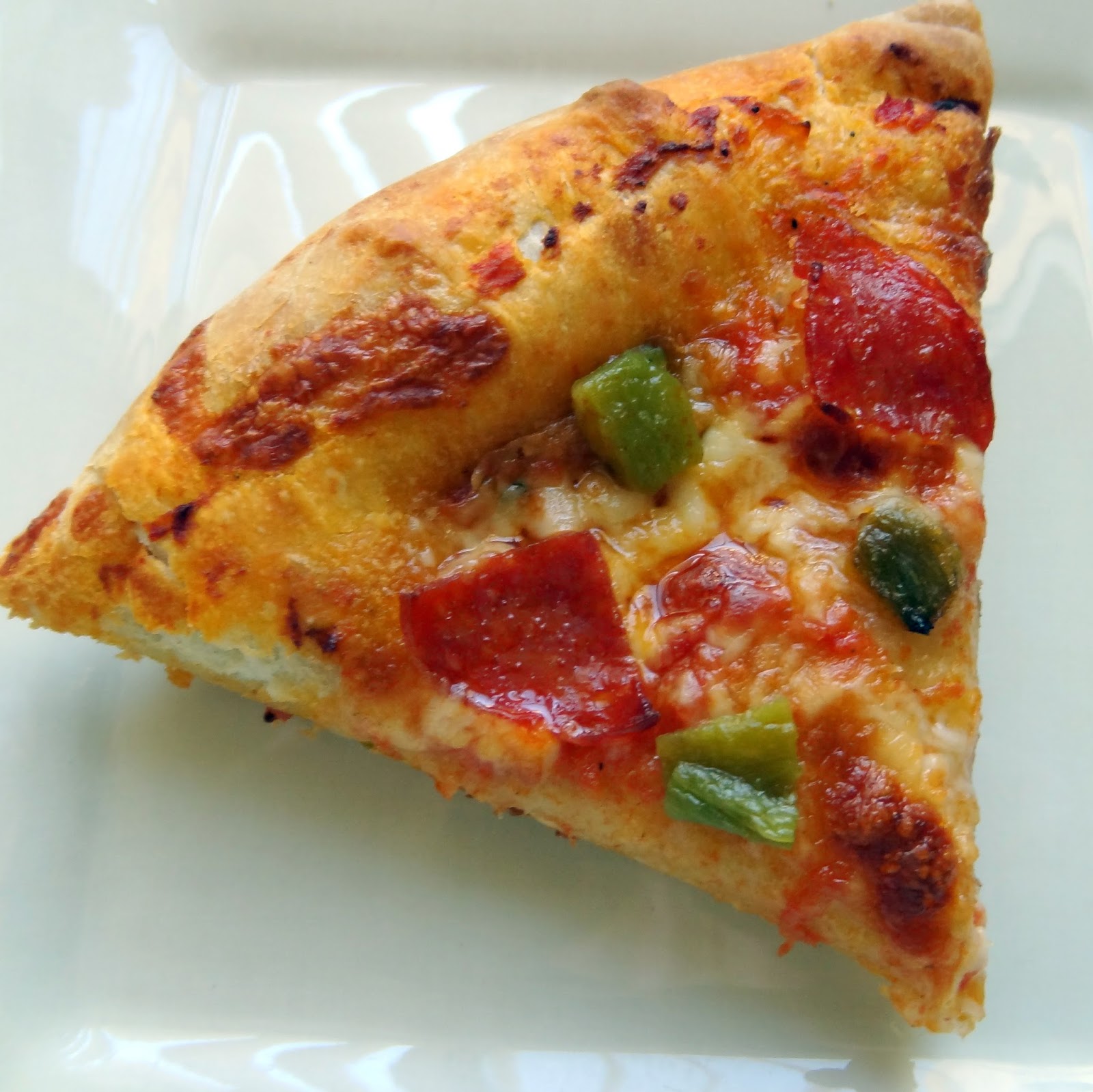
Hatch Chile Pepperoni Pizza

Check it out: my first time making pizza from scratch! I've been wanting to dive into the pizza-making world for the longest time, but anyone who follows this blog regularly knows my oven is capricious on a good day, homicidal on its worst. The oven doesn't even go up to 500°F that is usually recommended. I even bought a Boboli pre-made crust as emergency backup, that's how much I feared this endeavor.

But I had to try this combination of toppings. I have heard so much about delicious green chile pizzas in New Mexico I knew that it was worth a try to create at home, even with zero pizza skills. With Hatch chile season going strong, it was a man-up moment.
Of course, I had a little bit of trepidation with the dough. I obviously did not use nearly enough flour, made the rookie mistake of not picking the dough up and loosening it after spreading and before applying toppings, and as a result my pizza stuck rather badly to the sheet and my nice thin round pizza ended up being thick and crumpled because I needed a spatula to pry it off onto the pizza stone.

Also, I don't have a pizza peel, or even an rimless baking sheet. In fact, I have one baking sheet to my name, and I'm pretty sure it's older than me. So I flipped it over and used the bottom to spread my dough out. Which in retrospect was a dumb idea, because the 1" sides made it elevated above the pizza stone and my dough crumpled even more when transferring because of it, and the toppings fell off a bit.

I possibly shouldn't go on and on about my lack of pizza-making skills on my own blog. I should pretend that I wanted my pizza to look rustically handmade/asymmetrical and I wanted my pizza to have a thick crust.

Whatever. It still tasted amazing, and both the Bro-chi and Mr. Mochi were very impressed with my first attempt. The pizza was gobbled up in seconds, and I plan on stealing a rimless from my mother to perfect my technique. Just goes to show you can make a great tasting pizza that isn't very pretty, so don't fret if yours doesn't look perfect. If you're serving guests, just pretend that's what you were going for.

Sunday, September 1, 2013

Caprese Sandwich

Like I mentioned in my caprese skewers post, I am wild about caprese. Insalata Caprese is my  favorite Italian dish, and I especially love the versions with balsamic vinegar. Actually, I'm really just a rabid cheese fan (a Wallace-style obsession) as well as a lover of vinegar and fresh tomatoes. I'm prone to eating any of the key ingredients plain by themselves, so this dish that combines them all was made for a person like me.

I have to say that the success of this dish hinges on having fantastic tomatoes. And since right now the farmer's markets have the end of season's tomatoes, I recommend you start assembling this sandwich before summer's end.

Saturday, August 31, 2013

Modern Choctaw Cornsticks

None of the women in my family are pushovers. They are firebrands, fighters both feisty and ferocious. They are engineers, businesswomen, nurses. Above all: they are, without exception, beautiful and intelligent women who know what they want in life. Naysayers could try and call them headstrong, but no one ever doubts their strength.

It's a big legacy to live up to.

My paternal grandmother is no exception. She's half Choctaw and Caucasian and hails originally from Southeastern Oklahoma in the heart of the Choctaw Nation before moving to New Mexico. Her American Indian mother died when she was young, and when her father remarried she was sent away to Indian boarding school.

A normal little girl would have probably raised less hell, but you probably know where this story was going. I don't have an exact number for the amount of times she ran away from the Goodland Indian Orphanage, but enough that it became obvious she wasn't going to stay at a place if she didn't want to. She was going to carve her own existence the way she viewed it, even as a child.

Thursday, August 8, 2013

Tamago Kake Gohan (卵かけご飯)

I love sharing recipes on my blog that aren't even really recipes, but more of an introduction to an idea. This dish can barely be called a recipe, but definitely will introduce you to a fabulous was to enjoy eggs and rice that is truly a snap to prepare.

Tamago Kake Gohan (卵かけご飯) literally means "egg over rice" and it may look strange to a western audience, but it is actually very popular in Japan for breakfast. The raw egg gets mixed into the steaming hot rice, emulsifying the egg into a rich creamy sauce that is amazing with the hot rice.

The best thing about tamago kake gohan (or TKG for short) is that there are limitless variations to employ. I think I could do a tamago kake gohan recipe every day this month and still just be getting started on all the tasty varieties. This classic version has shoyu and green onions, but feel free to try adding some furikake, wasabi, or even some canned tuna. Later next month I have a garlic and curry version to share with you!