Image Map
Showing posts with label small bites. Show all posts

Tuesday, November 22, 2016

Julia's Korroke

All I wanted for my birthday was to learn how to make Julia's amazing korokke. Julia is one of my mother's very best friends and someone I consider to be part of my family. They've known each other since before I was born, and I grew up going over to their house, going on road trips together, and spending holidays with them.

I learned to ride horses with Julia's instruction, while her husband introduced my brother and I to the awesome world of computer games. I was too young to notice it at the time, but they were very influential in my life, encouraging me in my academics but also my hobbies as well. I'm thankful every Thanksgiving I've had so many amazing role models in my life. I know that sounds super cheesy, but you haven't met them! Our families go camping together, horse trail riding together, and even thrift shopping with one another! I especially like playing board games at their house, and wish my work hours didn't prevent me from seeing them as often as I'd like.

Julia's son got me set on this idea when he mentioned that his favorite part of Thanksgiving was his mom's croquettes, which is served with the traditional okonomi sauce (sosu), but also ranch dip. It just wasn't Thanksgiving without it, in his opinion.

Ranch dip? On korokke? I had to see this. And then Julia brought some over to my parent's house, and I was hooked. I would have never in a million years thought that ranch would work with croquettes, but it is delicious. I personally liked to alternate between the okonomi sauce and the ranch dip, so each bite sings.

Korokke, or Japanese croquettes, are very similar to the French croquettes, but are usually made with a higher ratio of potatoes to meat and served with the same family of tangy sauces that tonkatsu and a lot of fried foods is served with.

Sunday, November 13, 2016

All about that Konbini life

When I went to Japan in 2014, I didn't have a lot of cash to sling around. We backpacked around the country, staying in hostels, and ate a lot of cheap food. I've spent more on room service in one day than I spent on food for an entire two weeks in Japan. It helped my family took us out to absolutely fabulous meals I hope to be able to repay in kind some day, but we were very price conscious about our dining habits in between these ultra-luxe meals. We visited the local grocery stores near our hostels in order to buy groceries, and visited konbini.
chocolate covered shrimp chips

Konbini (コンビニ), as Japanese convenience stores are referred to, have taken the American convenience store concept and perfected them. Think I'm over exaggerating? Put it this way: the parent company of 7-Eleven Japan bought the original United States' 7-Eleven. Lawsons, which died out in America, is one of the largest chains in Japan and the success in Japan led to the chain returning to the U.S. via Hawaii. Konbini are serious business, and the Japanese have mastered it.

And if you visit Japan, I guarantee you will end up going to a konbini. Why? 7-Eleven has ATMs that take our credit cards. Japan has their own credit card system and a surprising amount of places don't take Visa, Mastercard, Discover, etc, but JCB and others, and even more are cash-only. If you don't stay far from the beaten path and stay around Tokyo and Kyoto you'll be fine, but just finding an ATM was tough in Yawatahama, let along somewhere that took Visa!

Sunday, September 11, 2016

Tenjosajiki Cafe (天井桟敷)

After leaving Beppu, we drove up and down mountains to reach Yufuin. We stopped by Yufuin on our way back to Yawatahama for a quick visit so our relatives could show us more of Kyushu.

While in Yufuin, we stopped by Kamenoi Bessou (亀の井別荘) a ryokan (inn) that included hot springs, a wonderful souvenir shop, and a restaurant space upstairs that was a cafe during the day and a bar after 7pm, called Tenjosajiki Cafe and transforming into Yamaneko (山猫) at night.

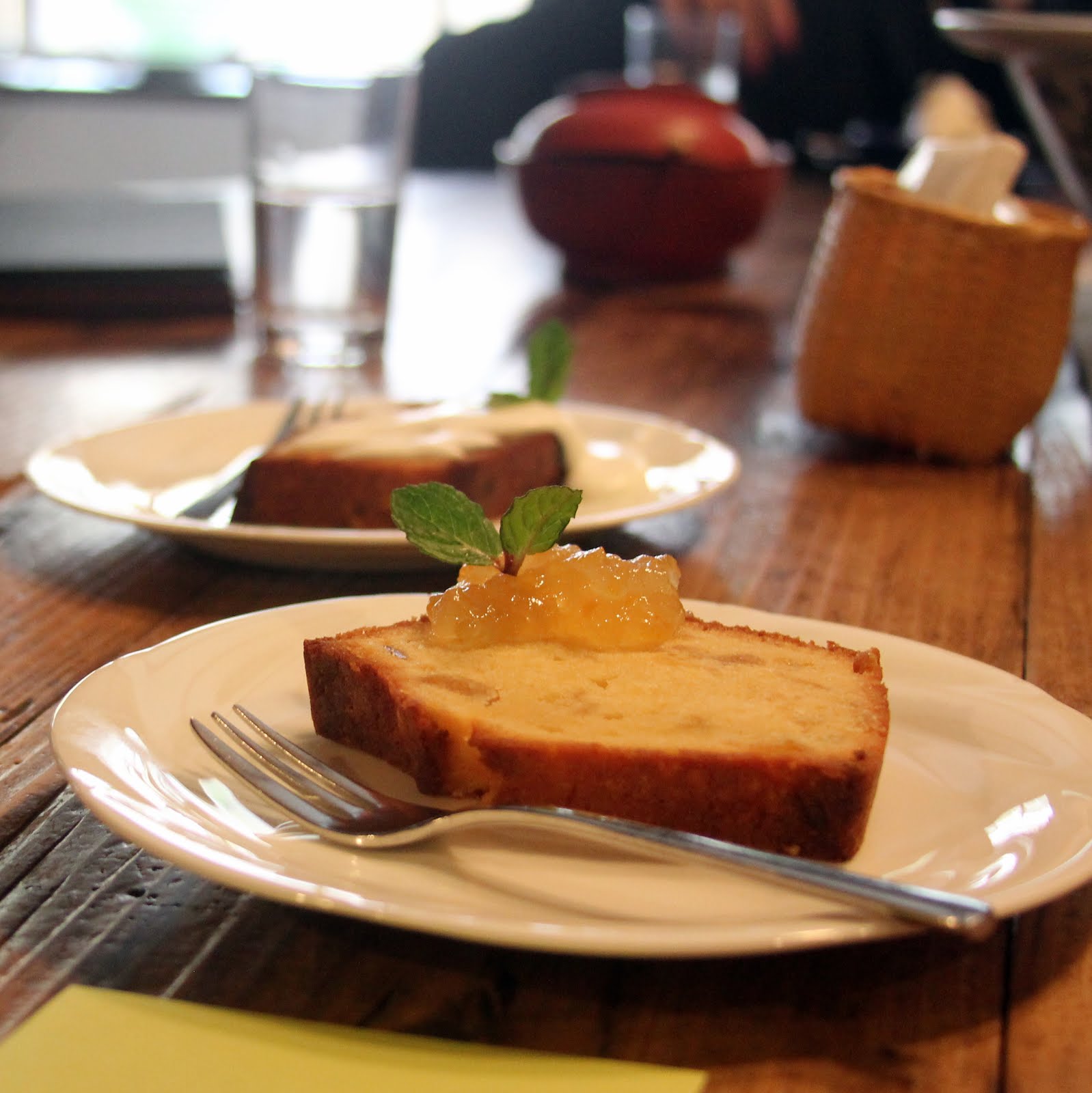
The ume pound cake
We picked up some citrus jam from the ryokan shop and ate it with toast all throughout our trip. It was less like a kitschy American souvenir shop and more like a luxury specialty shop that focused exclusively on regional and seasonal items. I loved browsing through there!

And stepping outside to take in the greenery surrounding this ryokan was magical: the mists swirled around lush greenery, cherry blossoms, and leafy trees. For a Southern California resident used to nothing but drought, it was truly like being transported to a magical forest.

Wednesday, September 7, 2016

Onsen Tamago (温泉卵)

In Beppu, there is a whole cuisine of cooking using the hot steam that erupts from the earth. Called jigokumushi (地獄蒸し), it literally means "hell steaming" which is perhaps my favorite name for a style of cooking, ever. Baskets of food are lowered into the surprisingly powerful steam of the hot springs and a short time later you have fresh produce, thin cuts of meat, and eggs cooked in the steam. There is even a jigokumushi pudding, where a flan is steamed in the mineral-rich steam that jets out of the earth.

I obviously couldn't share a recipe with you on jigokumushi as I don't know about you, but I don't have any hot spring jet steam handy and I think my steamer at home wouldn't be a good substitute. So I am sharing something just as traditional to both Yufuin and Beppu: Onsen Tamago (温泉卵).

Onsen Tamago literally means "hot spring eggs," and as you might have guessed, is named because the eggs are traditionally cooked in hot springs and served at ryokans (inns). Rather than the steam jets of jigokumushi, the eggs still in their shells would be lowered in baskets or nets directly into the hot springs themselves.

Tuesday, August 9, 2016

Kansansoubekkan (観山荘別館)

Our most memorable meal of Fukuoka (and perhaps the enitre trip) was at Kansansoubekkan (観山荘別館), a kaiseki restaurant.

Let us be clear: I am not a kaiseki person and neither is my mother. I'm a fan of donburi, ramen, and mochi. I am solidly a B-class gourmand. My mother is the type of person that got bored in France because every meal took so long.

So kaiseki was a leap for us. For those uninitiated in what kaiseki is: Kaiseki is a multi-course meal that really takes food to an art form.

Only seasonal ingredients, cooked fresh, are used, prepared and plated in a way to highlight not only the taste but the visual appeal of the dish.

We were served 12 different dishes over several hours in a gargantuan private room with just us in it and a view of their beautiful garden. It was a crazy ride, and something I am so glad I was able to experience!

We were sat in a traditional style room, without chairs, but there were several larger parties that elected to sit in a more western banquet style. We took a tour of the garden and took pictures in it, which I don't think most people were allowed to do, because we certainly messed up the pretty gravel designs by walking on it.

Wednesday, July 20, 2016

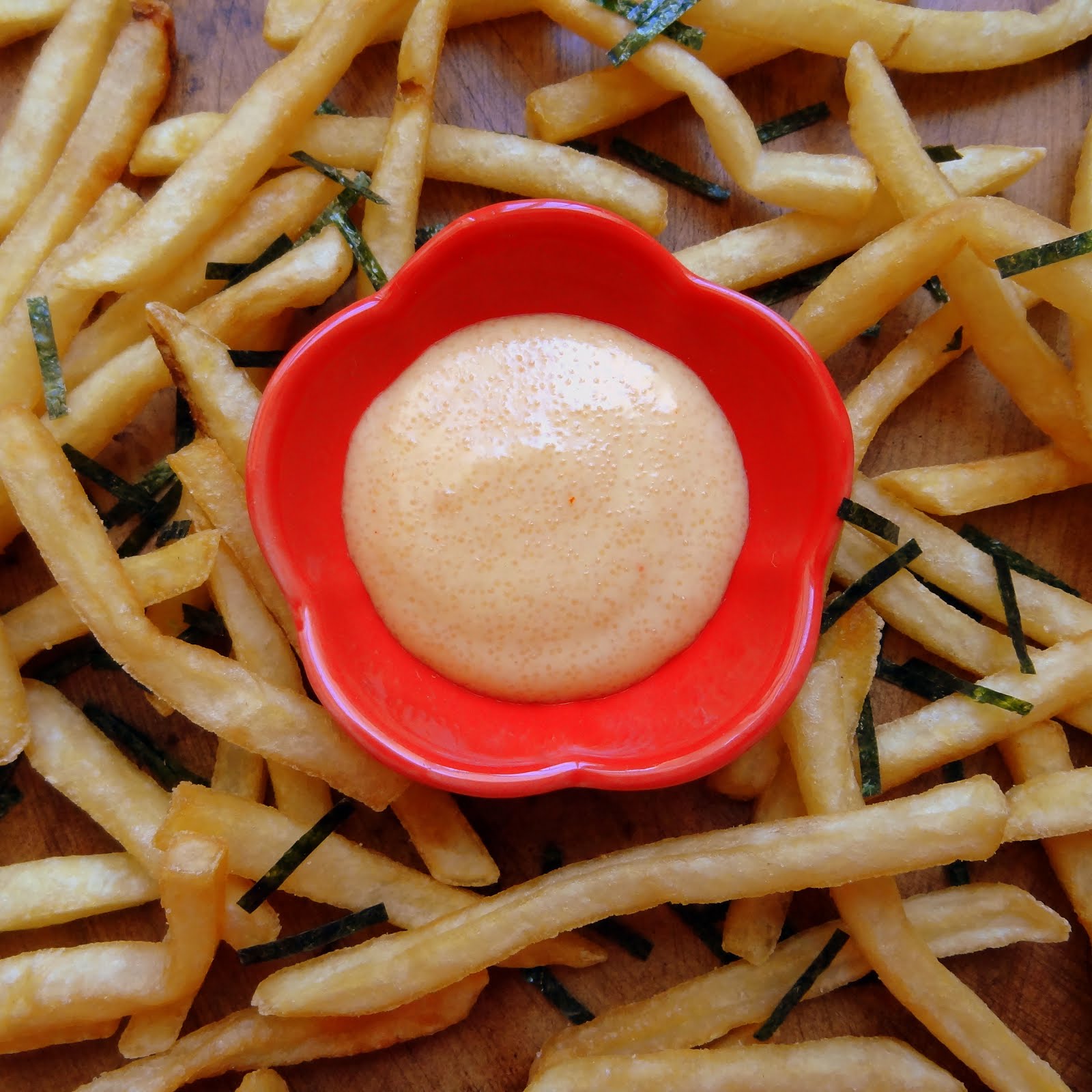
Fries with Mentaiko Mayo Dipping Sauce

Karashi Mentaiko (or usually just called mentaiko) is spicy marinated fermented fish roe (normally cod or pollock) that is a specialty of Kyushu that I introduced as part of my chronicle on my 2014 visit to Japan. Now you may be thinking that there's no way in hell I can marry American tastes with a Japanese product that is as funky, spicy, and fishy as mentaiko. Let me introduce you to my secret weapon: mentaiko mayo.

Mentaiko mayo takes the assertive fish roe and turns it into something creamy and delicious while still maintaining that zing and pop.

photo cred: Creamy Steaks
Mentaiko mayo is so popular there's even a mentaiko mayo Cheetos flavor in Japan, and I'm absurdly disappointed I have not seen or tried it (see here for a review) I love mentaiko mayo's versatility and I believe you will too. It's super easy to whip up, and once you do I think you'll find yourself spreading it on everything.

Some easy ways to enjoy it: spread it on top of baked salmon and broil to finish, mix it in with canned tuna instead of plain mayo for more of a pop, even smear it in a sandwich. But my favorite has to be as a dipping sauce for fries.

Sunday, August 23, 2015

Bacon Wrapped Mochi (餅の豚巻き)

I love mochi.

I've written odes to mochi.

My last meal on earth would involve mochi. Possibly several courses of mochi.

I love mochi stuffed with red bean paste, flavored with purple sweet potatoes, baked with coconut, stuffed with fresh fruit, grilled until puffy and covered in soy sauce, stuffed with peanut butter, covered in chili paste, served with boy chok and beef...

I've yet to meet a mochi I didn't love.

Mochi and I understand each other on a deeper level.

If you've only tried mochi when it is either A) filled with ice cream or B) as a topping for frozen yogurt, you are missing out. If you've never had a savory dish that included sticky rice cakes, you are a poor poor soul.

Here's an easy-to-make, easy-to-love recipe for a savory mochi snack. I was inspired by my recent trip to the 626 Night Market, where Nani Kore Hawaii had huge skewers of Korean mochi wrapped with paper-thin bacon for sale. Mine certainly upped the meat to mochi ratio!

Tuesday, January 20, 2015

Salted Nut Bars

Best. Cookie. Ever.

No seriously, I'm not the biggest fan of sweets, but this bar cookie rocks. It's an old family recipe that was obviously way ahead of its time because now treats like salted caramel and sea salt desserts are all the rage.

When we used to go up to a cabin in Big Bear Lake, CA to snowboard, my mother would bring these cookies to serve for dessert after her infamous turkey soup. These freeze amazingly, and you can just zap them for a couple seconds to thaw them, or even just wait for your coffee to cool down a bit and they will be edible by then. I just gnaw on them frozen.

Shown here with my Peppermint Sugar Cookies
I love bar cookies because I really hate using a rolling pin. If you look, I haven't included a single recipe that uses one in all my years of blogging. I just don't have the counter space here in my little shit hole of an apartment, and it's a bother. Plus bar cookies are less time consuming to make large batches without having to form cookies. And you never have to worry that you overcrowded the cookies and your cookies will turn out funny shaped as they spread.

Bar cookies are for smart but lazy people, basically.

Friday, January 16, 2015

Taberu Rayu English Muffins

This is one of my infamous not-sure-if-it-even-counts recipes because there's really nothing to this recipe. It's more instructions of assembly than a true recipe, but that's the sort of thing I excel at. Some days even the microwave takes too long, you know?

It's no secret I've been in a funk lately. My nature tends towards introspection, analysis, and the esoteric on a good day. That's just the way I am. But sometimes my mind, which most people deem as a gift, lazily spirals into morbidity, melancholy, madness.

The most important thing for anyone to do is simply what they can do now, and not focus on what they could have done. You have to find happiness not tied to measurable things; happiness not tied to titles or success or how you stack up compared to other people. You have to just live.

So fuck it. Let's make some English muffins.

Tuesday, August 26, 2014

Taberu Rayu Cucumbers (きゅうりの食べるラー油)

It's hot here in Southern California, and the drought is so bad I'm almost afraid to do dishes. Rather than relying on fast food, chips and dip while it's too hot to cook, I'm brainstorming healthier, faster, and cooler options for a busy cook.

Like with my Togarashi Zucchini, this is a dish that is a snap to make, and is a great busy weeknight side to serve with something else prepared just as fast or pre-made. Even better, this recipe is a chilled side, which for late summer is a great treat!

This almost isn't a recipe it's that easy, but that also makes it easy to double or triple. It is also a great example of how easy and versatile taberu rayu is: making a super-tasty and healthy veggie side dish in minutes. You can turn cucumbers into a savory spicy powerhouse side with very little effort.

If you want to prep this ahead, chop the cucumber ahead of time and dress right before serving, that way if any water leeches off the cucumber in the fridge, you can drain it before adding the taberu rayu.

Tuesday, July 15, 2014

Jalapeño Cheese Age-Gyoza (揚げ餃子 の ハラペーニョ チーズ)

Normally here in the United States, we'd call these "Jalapeño Cheese Wontons", but since these are inspired by Honda-ya's Cheese Age, I thought it appropriate to called them gyoza instead.

Izakaya Honda-ya is our go-to place for a cheap but satisfying night out. Late on a Monday or Tuesday normally doesn't draw a crowd, they don't mind us lingering and ordering sporadically throughout the evening.


One of our favorite indulgent dishes is their Cheese Age, which means "fried cheese" but is so much more and very crave-able.

Luckily for you, it's also very simple to make. With just four ingredients, and the ability to prep these ahead, these are a great party snack.

Age (pronounce ahh-gay) means "fried" in Japanese, so age-gyoza means simply "fried dumpling." I'm still working on my Japanese grammar and sentence structure, so feel free to correct me in the comments regarding the Japanese title.

Wednesday, June 25, 2014

Quail Egg Spam Sliders

It's been pretty hectic since I came back from Japan. I started teaching (registered veterinary technician classes) and it's amazing how the weeks can slip away from you. I can't believe it's almost July.

Though I'm glad things have slowed down a bit, because I have a lot of backlogged recipes to share with you, and I'm especially excited to bring you recipes from my trip to Japan! Plus this summer I have tons of events to share with you, from the plethora of night markets that abound to dancing through Obon matsuri season!

This recipe, however, certainly didn't come back with me from Japan. This is something born out of my love for SPAM and King's Hawaiian sweet rolls. You've already heard about my obsession with SPAM in multiple posts, but King's Hawaiian sweet rolls are another favorite of mine. My Japanese American side of the family always serves them at Thanksgiving, and I love making sliders with some sweet rolls, mashed potatoes, stuffing, and cranberry-orange relish at the dinner table.

No, I never grew out of playing with my food. Thanksgiving sweet roll sliders are amazing, though. Dunk them in gravy.

These sliders might be even better. Sunny-side-up quail eggs, crispy slices of SPAM, and gooey American cheese are sandwiched in a sweet roll and drizzled with raspberry sriracha sauce for an easy-to-make party dish that takes only one skillet to make. These puppies are sweet, salty, savory and spicy, all in one bite, with oozey egg yolk and crispy SPAM making for a great textural contrast.

These may sound crazy, or like they have too much going on, but take a leap of faith and try one.

Saturday, February 8, 2014

Fruit Sando (フルーツサンド)

Today is the second anniversary of my very first blog post here at Miss Mochi's Adventures. I'm still wrapping my head around that fact. Do me a favor and don't look back too far, some of the pictures definitely need updating! I'm still not very confident in my photography skills, but anyone can see I've made a big improvement.

The very first recipe I posted for this blog was ichigo daifuku mochi, so in celebration I decided to post another recipe involving strawberries. This one garnered a lot of interest when I mentioned it in my katsu sando post, after all, who here in the states has heard of a fruit and cream-filled sandwich?

The Japanese definitely treat bread and sandwiches differently than we do. They don't balk at strange sweet sandwich fillings, because they don't have a long standing history of savory sandwiches like we do. Fruit and cream sandwiches as well as other sweet sandwiches like chestnut cream are on the convenience store shelf right along with ham and cheese. And if you think about it, we certainly have sweet sandwiches that are immensely popular: PB+J anyone? Peanut butter and jelly sandwiches are so ubiquitous that they have an acronym in popular use! No one would think twice if you made a peanut butter and banana sandwich, or a peanut butter sandwich with some strawberry slices thrown in.

Tuesday, January 28, 2014

Dorilocos: Tostilocos with Doritos

This all started when my coworker shared with me her secret to a happy marriage: on Sundays, she would share a plate of Nacho Cheese Doritos with her husband while they watched television. They always have them served like papitas preparadas, sprinkled in hot sauce and lime juice but with Doritos instead of potato chips. She brought in this snack on a busy day at the office, and offered me a bite.

I was hooked, line and sinker. I have a huge affinity for antojitos, literally "little cravings" or Mexican street food. Except my cravings certainly aren't little by any stretch of the imagination. I've waxed poetic about downtown Los Angeles and the influence of Mexican street food with my L.A. Street Dog post. The same coworker that inspired this recipe was the catalyst for my chile mango candies when she brought in vero mango lollipops. I even used Mexican chocolate and dried chiles for my Christmas gift of caramels.

Now the Doritos are amazingly delicious served the way my coworker introduced me, with lime juice and Valentina hot sauce. But the idea that was planted in my head was something a little more epic: tostilocos with Doritos, or as I named them, Dorilocos.

Tostilocos are a newer antojitos to hit the street food scene. Tostilocos were spawned in border towns like Tijuana around the 1990s, a crazy mixture of salty, sweet, and sour. It's one of those dishes that on paper sound ridiculous, only making sense when you try it yourself. Cucumber, jicama, pickled pork skin (called cueritos), Japanese-style peanuts, hot sauce, chamoy sauce, and even tamarind chewy candies are poured on top of Tostitos chips for a dish that is aptly named loco or "crazy." Here in Orange County, you can find tostilocos at fruit juice shops, or even at swap meets.

Wednesday, January 15, 2014

Katsu Sando (カツサンド)

I know that Japanese cuisine is famous for it's use of unadulterated white rice. Donburi, onigiri, curry rice all use plain white rice. At nearly every meal, white rice is a star player.

However, the Japanese do eat bread, especially in modern times. They even make sandwiches very similar to ours, albeit with some Japanese flair, called "sando" (サンド). Some popular fillings include egg salad or ham, but you may be surprised to see even varieties like fruit sandwiches.


Marukai's Katsu Sando
The best bread for making a sando is shokupan (食パン), which is a soft pillowy bread that is slightly sweet, and manages to be soft while still having a very tight grain that has some stretch and spring to it. Honestly it's kinda like the mochi version of sandwich slices, soft but stretchy. I also like it because it's perfectly square, and you can get it cut thick. I used it in my Milk Toast post; I like it in this recipe because it doesn't compress down into nothingness like regular sliced bread here in America will, but if you don't have access to shokupan and don't feel like baking, I have some alternatives and suggestions for you down below.

Here's a hearty sando using tonkatsu, one which is a snap to make if you make a whole bunch of tonkatsu at once and freeze the extras. This is also good for those of you who don't have a rice cooker, or you too have your own version of Mr. Mochi breathing down your neck while you edit a blog post. (Hence the less than stellar photography, and I actually only had some pretty wimpy cheap white bread around.)

Thursday, October 3, 2013

Baked Brie with Figs

Certain foods can take your brain on a trip down memory lane. Your grandmother's chocolate chip cookies, your mom's pot roast, everyone has some meal that triggers a happy nostalgic time in your life.

A lot of my happy nostalgic foods are straight from the earth. My grandparents have always had a garden filled with fresh veggies: sweet peas and their beautiful flowers, giant heirloom tomatoes, and peppery radishes with dirt still clinging to the roots. My parents have citrus, avocados, and even cherimoyas hanging from trees throughout the year. Biting into a fresh summer peach, still warm from the sun as it ripened on the tree, takes me back to running around in my parent's orchard where my brother and I used to throw oranges that had been knocked down by the Santa Ana winds at each other.

One fruit that I almost never eat nowadays is figs. They have a short season, don't ripen well off the tree, spoil relatively easy, and I work on the weekends which makes the local farmer's market off-limits. So when I visited my grandparent's house, it was a delight to have a bag full of ridiculously ripe figs to enjoy. My grandmother has a fig tree in her front yard for as long as I could remember, but as a kid I was wary of figs. They were weird, in my youthful opinion, too many contrasting textures and too honey-sweet. I liked sour plums and zesty kumquats; I was one of those weird kids that liked grapefruit with no brown sugar or broiling needed.

It's a funny thing, to take a bite of this dish and wax nostalgic about a fruit you didn't like as a kid.

One thing I can confidently say is that I have always liked brie, rind and all.

Tuesday, September 17, 2013

Yuen Yeung Popsicles

I wasn't kidding when I told you I was obsessed with popsicles recently! I've been trying to create fun flavors that I can't buy in the supermarket. My latest brainwave was taking the drink Yuen Yeung and turning it into a dessert!

Yuen yeung, also known as yuanyang, yinyong, or yinyeung, is a super tasty and easy to make drink. Yuen yeung, named after the opposites-attract nature of Mandarin ducks, is milk tea and coffee mixed together, and can be served either hot or cold. This drink hails from Hong Kong, where it was originally served with street food, then it graduated to being served in tea cafes. In fact, this drink has become so popular that Starbucks in Hong Kong had a Yuen Yeung Frappuccino!
I so want to try one!

Since the coffee/tea hybrid is usually made with Hong Kong-style milk tea, it can be very rich because it is made with evaporated or condensed milk. I usually prefer frothier and lighter bubble milk tea when served chilled because that uses milk instead, but I knew that Hong Kong-style milk tea was totally the way to go in this case because it would make the end result totally creamy like a fudgesicle!

Of course, I couldn't resist throwing in a twist and adding in some spice just for a little stronger tasting ice pop. I threw in a couple star anise in with my tea, but I think cinnamon or even cocoa powder would be a great addition!

Thursday, August 8, 2013

Tamago Kake Gohan (卵かけご飯)

I love sharing recipes on my blog that aren't even really recipes, but more of an introduction to an idea. This dish can barely be called a recipe, but definitely will introduce you to a fabulous was to enjoy eggs and rice that is truly a snap to prepare.

Tamago Kake Gohan (卵かけご飯) literally means "egg over rice" and it may look strange to a western audience, but it is actually very popular in Japan for breakfast. The raw egg gets mixed into the steaming hot rice, emulsifying the egg into a rich creamy sauce that is amazing with the hot rice.

The best thing about tamago kake gohan (or TKG for short) is that there are limitless variations to employ. I think I could do a tamago kake gohan recipe every day this month and still just be getting started on all the tasty varieties. This classic version has shoyu and green onions, but feel free to try adding some furikake, wasabi, or even some canned tuna. Later next month I have a garlic and curry version to share with you!

Monday, June 24, 2013

Strawberry Bing Tanghulu (冰糖葫芦)

I mentioned in my 626 night market post that I had tried a street sweet from China that I was dying to share with you all, bing tanghulu (冰糖葫芦). When I first saw this sweet-on-a-stick, I was mesmerized by it. It looked like a person took fruit and made them into jewels, the way they glistened!

I've seen it spelled various different ways in English, from bing tanghulu, bingtang hulu to just tanghulu, or sometimes even bing tang hu lu (apparently just insert spaces according to your fancy). Any which way, fruit on a skewer that has been coating in a thin layer of hard candy is deliciously craveable. The conflicting textures of the hard candy and ripe fruit, crunchy/soft, and the opposing flavors, sweet/tangy, make it a delicious treat!

My twist on Bing Tanghulu, not dipped whole but drizzled!

Wednesday, May 8, 2013

Smoked Salmon Crostini

I don't do a lot of entertaining, but when I do, it usually consists of finger foods and tea sandwiches. I love tea parties. Even more than tea parties, I love salmon.

My mother has always championed the healthiness of sustainably farmed salmon, and she served it so much my brother and I would complain as teenagers. Yes, we were spoiled brats. Now, being a terribly poor early-20's girl with her own place, I dream of salmon yet rarely buy it. So when I threw my party recently as mentioned in the previous post, I used it as an excuse to gorge on smoked salmon.
Like my caprese skewers, this is more about assembly than any other cooking skill. I've made these before, but this time I worked a little more on presentation and made roses out of the cucumber. It's a really quick step, but obviously they taste great either way.

As an alternative to crostini, you could even just take plain white bread, cut into squares without the crust, lightly butter to keep them from getting soggy, and make attractive open-faced tea sandwiches instead!