Image Map
Showing posts with label seasonal. Show all posts

Friday, December 23, 2016

Peppermint Sugar Cookies

What's your favorite holiday song?

I think I must belong to an elite super group of people who have listened to obscene amounts of holiday music until they have unwittingly become armchair experts. 

Name your favorite holiday song and I can either name at least two of the artists who have recorded it without referencing the internet, sing the chorus, or both. I tested this by asking my Facebook friends for their favorite holiday song, and I am currently 8/8 nailing it in both categories.

That's pretty impressive for someone who has never willingly played a holiday song. This has all been absorbed passively from my exposure to my mother's insane holiday song collection. She estimates she has at least 200 versions of  just the song "Silent Night" to give you some perspective on how much holiday music she has.

My favorite is "The Wassail Song." I have no clue why really, I just love the refrain. Maybe it's because I can really belt it out* and the quality of singing is less important than the enthusiasm at which it is sung.  I also really love "Auld Lang Syne" but no one in their right mind would be comfortable with me singing that one.

Holiday songs are imperative to making these cookies. When I go over to my mother's house to bake cookies, they never stop playing.

*I can also belt out Frosty the Snowman both in English and Spanish. This is the only thing I know to say in Spanish, which goes to show you they teach you nearly nothing useful in mandatory language classes like "Help! I think I need a doctor!" but hey, I know a Christmas carol!

Sunday, December 18, 2016

Mulled Wine Stuffing with Sausage and Chestnuts

Here's another special holiday family recipe from my mother that I had to make sure I learned how to make. This stuffing is possibly my favorite culinary aspect of the holiday season!

I love how the wine gives this stuffing acidity and a little bit of bitterness to cut through the richness of butter, sausage and bread. Most stuffings can be be a little stodgy and bland, and the use of the mulled wine brightens it up.

I've written about this stuffing on my slow cooker mulled wine recipe, as that is the ingredient that really makes this stuffing.You can add in dried fruit or nuts, or remove the meat entirely. It will still be acceptable to me. However, if you omit the mulled wine, it just won't taste right in my book. This is the only stuffing for me!

Now, the big trend for food photography for stuffing is giant pieces of bread that toast up nicely in the oven and make for a glorious picture, however I don't think that tastes as nice because everything doesn't have a chance to incorporate. If you prefer a drier stuffing, reduce the liquid to 1 cup each of broth and mulled wine. I like mine nice and mushy and don't really care if that's not as attractive to photograph. 

Friday, November 4, 2016

Yudofu (湯豆腐)

Kyoto, since it was the capital of Japan for so long, is steeped in history and tradition. One of those traditions still popular today is shojin ryori, or Buddhist cuisine. As Buddhism was introduced into Japan in the 6th century, so was the idea of vegetarianism for religious ideals. This cuisine became synonymous with Kyoto as Kyoto is home to some of the longest standing Buddhist temples and sects that still carry on this tradition.

As a whole, Japan is not very vegetarian-friendly. Dashi, made with dried bonito shavings, is omnipresent and veggie dishes on most menus will have some sort of fish in it, if only the broth. If you're a pescetarian, you're in heaven, but if you're vegan or vegetarian, I'm not going to be the best person to tell you how to navigate Japan and I recommend finding a blog that specializes in both Japan and veganism. I ate things in Japan that I'm still not quite sure what I ate, so I'm not going to claim any sort of authority on either subject. I normally write about Japanese American food!

Sunday, August 21, 2016

Amalfi (アマルフィ)

Before paying our respects at our family grave site and visiting the local temple in Yawatahama, my relatives in Japan took my brother, mother, and I to an Italian restaurant in the heart of Yawatahama called Amalfi. I wanted to share this experience with you as our meal showcased not only the Japanese's twist on Italian food, but also some of the local ingredients of Shikoku. Their attention to detail and ability to express a lot of flavor in small portion sizes were two things I was very impressed with.

Despite it being the lunch hour, our meal was a multi-course extravaganza. I think a lot of restaurants back in the states could learn a thing or two about portion control from places in Japan like Amalfi. This was a five course meal that managed to stay light!

We started out with an amuse-bouche of a warm potato cream soup with a thin savory crisp skewered on top with a side of a house parmesan cream cheese. The potato soup was pleasantly creamy and without any sort of graininess that sometimes happens with potato soup. I was impressed with how they managed to serve it piping hot as I've had amuse-bouches arrive lukewarm by the time they are done plating, and all of ours arrived at once. There was not a large staff by any means, so that meant they worked like lightning!

Wednesday, August 10, 2016

Adventures in Japan: Fukuoka!

After taking a long plane flight from Los Angeles to Tokyo, we took a teeny plane from Narita, Tokyo to Fukuoka, Kyushu where most of my relatives call home.

Fukuoka is the capital of Fukuoka prefecture, and it's one of the biggest cities in Japan. What I liked the best about Fukuoka is even though it's the 6th most populous city in Japan, it has a lot of open spaces, greenery, and little shrines even in the heart of it.

We were led through Fukuoka at a blazing pace by my relatives. Coming from Orange County, which has virtually no public transportation, we were amazed when we took a plane, private car, taxi, ferry boat, bus, train, and subway all within a 24 hour period. Not only was I jet-lagged, I was overwhelmed.

Fukuoka had two of my favorite shrines. I fell in love because they weren't tourist attractions, like I would experience later in Tokyo and Kyoto, crowded with people of all walks of life.

Tuesday, August 9, 2016

Kansansoubekkan (観山荘別館)

Our most memorable meal of Fukuoka (and perhaps the enitre trip) was at Kansansoubekkan (観山荘別館), a kaiseki restaurant.

Let us be clear: I am not a kaiseki person and neither is my mother. I'm a fan of donburi, ramen, and mochi. I am solidly a B-class gourmand. My mother is the type of person that got bored in France because every meal took so long.

So kaiseki was a leap for us. For those uninitiated in what kaiseki is: Kaiseki is a multi-course meal that really takes food to an art form.

Only seasonal ingredients, cooked fresh, are used, prepared and plated in a way to highlight not only the taste but the visual appeal of the dish.

We were served 12 different dishes over several hours in a gargantuan private room with just us in it and a view of their beautiful garden. It was a crazy ride, and something I am so glad I was able to experience!

We were sat in a traditional style room, without chairs, but there were several larger parties that elected to sit in a more western banquet style. We took a tour of the garden and took pictures in it, which I don't think most people were allowed to do, because we certainly messed up the pretty gravel designs by walking on it.

Friday, July 22, 2016

Mizuna (水菜)

Mizuna (水菜) is a green that you will see called by a lot of different names here in the states: Japanese mustard, potherb mustard, even California peppergrass or the wildly ambiguous "Japanese greens." I like sticking to the name Mizuna because I think those other names are a bit misleading. Mizuna isn't that peppery and it's certainly not mustardy despite being in the mustard family. The name "mizuna" literally means "water greens" which refers to its juicy stems.

I'd peg the taste of mizuna as plesantly crisp, very mildly peppery (much less than arugula), with a bit of earthiness in the leaves. I'm not a fan of frisee or arugula because they tend to overwhelm so many other flavors, but I find mizuna to have just enough kick and bitterness for me. I also love that you can use the stems just as well as the leaves in most dishes without trimming as they are just as mild as the leaves.

Actually, you've probably already eaten mizuna and just not realized it! Baby mizuna is a popular green to be in a mesclun or spring salad mixture. Especially here in California, you can often find baby mizuna alongside other greens in a mixed salad.

Feel free to use those juicy stems! They aren't overly bitter at all!
In Japanese cooking, you will find mizuna most commonly pickled, simmered, or added to a hot pot dish rather than a salad. Now if you ever come across a recipe for a cooked mizuna dish and it seems like they got the amount wrong--they couldn't possibly mean to add that much in--don't worry as it cooks down quite a bit.

It is a very cool weather friendly plant, which is why you will see it added to a lot of hot pots. Especially in the winter months when you crave a hot pot, traditionally there weren't a lot of leafy greens to choose from.

How to use mizuna? Any way you would use arugula you can substitute mizuna (especially if you're like me and think arugula is a little too feisty sometimes). Try some tossed with balsamic vinaigrette, strawberries, crumbled feta and walnuts for a salad, or sauteed like spinach next to a roast. My mother likes to sneak all sorts of homegrown greens into her sandwiches, so I often stuff some into my Caprese Sandwich recipe. I think a BMT (bacon, mizuna, tomato) would be equally delicious!

Recipes that feature mizuna:
Ozoni
Mizuna, Apple, and Jicama salad with Yuzu Kosho Vinaigrette 
Caprese Sandwich

Tuesday, January 20, 2015

Salted Nut Bars

Best. Cookie. Ever.

No seriously, I'm not the biggest fan of sweets, but this bar cookie rocks. It's an old family recipe that was obviously way ahead of its time because now treats like salted caramel and sea salt desserts are all the rage.

When we used to go up to a cabin in Big Bear Lake, CA to snowboard, my mother would bring these cookies to serve for dessert after her infamous turkey soup. These freeze amazingly, and you can just zap them for a couple seconds to thaw them, or even just wait for your coffee to cool down a bit and they will be edible by then. I just gnaw on them frozen.

Shown here with my Peppermint Sugar Cookies
I love bar cookies because I really hate using a rolling pin. If you look, I haven't included a single recipe that uses one in all my years of blogging. I just don't have the counter space here in my little shit hole of an apartment, and it's a bother. Plus bar cookies are less time consuming to make large batches without having to form cookies. And you never have to worry that you overcrowded the cookies and your cookies will turn out funny shaped as they spread.

Bar cookies are for smart but lazy people, basically.

Tuesday, January 13, 2015

Slow Cooker Mulled Wine

Some of these recipes on this blog are really for my own use. I needed to record them in some lasting way so that way I would be able to recreate them. My mother's Turkey and Hominy Soup, for instance, is a behemoth of a recipe that really stands out like a sore thumb compared to my usual repertoire.

I like simple and fast recipes that usually feed one or two people. Her recipe uses a twenty pound roast turkey and six pounds of hominy to start.

Her recipe takes two days to make normally (one to roast the turkey, another to simmer the bones all day to make the broth), while most of my recipes take less than 30 and some can barely be called "recipes" but more "mildly fun food ideas" in actuality.

So why do I feel the need to record these recipes that really aren't my style? Because someday my mother won't be able to make them. Some day it will be just me in charge of holiday celebrations, and I will be lost as how to capture the nostalgia.

Wednesday, May 14, 2014

Kumquat Tofu Cheesecake

I'm sad winter is over and spring is soon to follow. I love winter because it means our citrus trees start producing, and from winter to the start of spring we get our crop of kumquats, oranges, and tangelos. This year, some unseasonable winds knocked down what remained of our kumquat crop, so I'm glad I got to make this cake for my mother's birthday before that happened!

Don't let the name scare you, this tofu cheesecake isn't a health food. However, it retains that creaminess that you love about cheesecake, while boasting a lot more protein than a traditional cheesecake. I bet you if you chose to stay mum about the fact it was packed with protein, your guests wouldn't even know it had tofu in it. It's also a bake-free cheesecake, which is great since we are having a serious heat wave here in Southern California.

If you don't have access to kumquats, you could serve this with no topping at all, or any fresh fruit that you choose. I think blueberries, strawberries, or raspberries would be a great topping choice! Of course, if you have any jars of kinkan no kanroni in your cupboard, you're good to go.

This recipe is adapted from recipes who use the metric system and different size cups, so while I converted the recipe, I also included some weights where applicable because it's more accurate.

Monday, February 3, 2014

Setsubun and Ehomaki Recipe!

Today is the day before spring begins according to the lunisolar calendar. On February 3rd, the Japanese celebrate Setsubun, celebrating the start of spring. Setsubun no Hi (節分の日), also known as the Bean-Throwing Festival, celebrates the start of a new year according to the lunar calendar. So several things are done to bring good luck to the coming year, as well as chase away the demons of the old year.

First, is the ritual of mamemaki (節分), which literally translates as bean-throwing, to drive away bad luck and demons (called oni). Usually someone in the family will dress up as a oni and people will stand at the doorway and throw soybeans at the door until the oni retreats. We had way too much fun throwing soybeans at Oni-Tiara, who in turn had way too much fun eating the soybeans.

So now that you've driven out the bad luck and oni (and in our case, attracted a begging pooch), you now eat some soybeans yourself to invite good luck in. Traditionally you eat as many soybeans as your age (Tiara should have stopped at seven beans) but I ended up snacking on them while I wrote this post, so I'm either extra lucky, or more probably, just fatter.

Another ritual is eating ehomaki, a makizuki sushi roll that is completely uncut, and contains 7 different ingredients for good luck. You're supposed to eat it in complete silence while facing a special auspicious direction that changes every year, for instance 2014 the lucky direction is east-northeast.

Now, even if you don't want to eat a whole sushi roll in complete silence, ehomaki are very tasty! They are actually just uncut futomaki, or fat sushi rolls, but it is kinda fun to eat them uncut like a giant sushi burrito. Maki-san at JustHungry has some great ideas for nontraditional ehomaki fillings on this page, as well as the most traditional fillings.

Tuesday, January 21, 2014

Reito Mikan (冷凍みかん)

Exciting news! I am visiting Japan this spring! I can't wait to share the experience on my blog! This is my first time visiting, so I am absolutely thrilled to finally be going! It's going to be a bit of a budget trip, so expect a lot of pictures of 7-11 bento boxes.

One of the places I will be visiting is my family's ancestral home on Shikoku (四国). Shikoku is the smallest of the four major islands of Japan, and is considered the most rural. Most tourists never set foot there, I guess you could say it's kinda like visiting Wyoming instead of New York here in the states.

Within Shikoku, I will be heading specifically to Ehime Prefecture's Yawatahama city. Ehime Prefecture (愛媛県) is the largest producer of citrus in Japan and Yawatahama (八幡浜市) is especially known for its citrus as well as its harbor.

Shikoku island in brown*
I find it slightly hilarious that my Japanese side of the family lives there, since I hail from Orange County, CA and grew up surrounded by a citrus grove.

One of their biggest crops is mikan (蜜柑 or みかん) also known as the satsuma mandarin. These diminutive fruits resemble clementines (marketed here as "Cuties") in their small size, but their bumpy loose skin with large pores make the mikan look more rustic. I love these seedless wonders, especially their lack of pith and easy-to-peel skin.

So until I finally set foot in the Land of the Rising Sun, I'll be trying to share some Shikoku specialties! First up is a fun quick snack, reito/reitou mikan, which is actually popular all over Japan. There's even a crazy song about reito mikan.

Saturday, December 28, 2013

The Donut Man

Shun (), or seasonality, is paramount to Japanese cuisine. Not just gourmands who are constantly in and out of kaiseki restaurants, but everyone knows when the first crop of rice will hit the supermarkets and will snap up bags. Now imagine if you went to your nearest Kroger supermarket and your Wonderbread advertised that it was made from the first wheat crop of the year. That's what it's like to live in Japan, seasonality is just a part of life.

The same goes for the Donut Man. If you live in the greater Los Angeles area, you probably already know about the Donut Man, originally established as a Foster's franchise location in 1972. But for those of you not familiar with the Donut Man, it's a pretty unassuming place. A stand-alone shack on a quiet stretch of the historic Route 66, it looks like every other shop peddling sugary dough in the wee hours of the morning.
Jim Nakano (photo from DM's FB)

Except the crowd around it... and it's open 24/7, so that crowd is present at 10 pm.

So you approach, and the giant hand painted signs on the windows let you know there's more to these donuts than glazed or jelly-filled. Depending on when you make your trek, you might be lucky to score a strawberry or peach-filled donut. These beauties don't resemble doughnuts so much as a treasure chests stuffed with fresh fruit; glazed donuts are sliced and propped open like a clamshell with glazed strawberries or peach slices.

The fervor surround these doughnuts are brought to a higher pitch because they are only available seasonally. Craving a strawberry doughnut in December? Tough luck. The Donut Man will only make these fruit creations during the fruit's peak season here in Southern California. Right now, they have pumpkin doughnuts and blueberry stuffed creme puffs as well as donuts sprinkled red and green for Christmas.

Of course, being a hapa Japanese American food blogger, it is a totally fair argument that my personal worldview biases me on this, but I believe that it's no coincidence that the man behind the Strawberry and Peach Donuts, Jim Nakano, happens to be a fellow Japanese American.

Tuesday, December 10, 2013

Chai Persimmon Sorbert

My great uncle grows the crisp variety of persimmons ("kaki" 柿), called fuyu. Every year, I am entrusted with a giant Trader Joe's bag full of the beautiful orange fruit. I should have weighed the bag to find out exactly how many pounds, but trust me when I say it's way too many for one Miss Mochi to eat.

I stuffed them into bundt cakes for Thanksgiving. I chopped them over Greek yogurt and granola, sprinkled with cinnamon for breakfast. I served them as an appetizer with brie and crackers. I made bowls and bowls of fruit salad.

They were still ripening too fast for me to consume or cook them all fresh. I had some so ripe they were jiggly custard bombs ready to explode. I needed to do something, stat.
Betty has a new attachment!

And then I found this recipe, and swooned immediately. I knew exactly what I would do to salvage all the overripe persimmons crowding my counters. I knew this was what I was looking for, and I couldn't wait to play up the natural spiciness of the persimmon with strong chai tea rather than plain black tea. I also couldn't resist using a gift card to get myself an ice cream maker for my tangerine-colored mixer, "Betty."

This recipe can be made with either the hachiya, which is astringent until it is ripened to jelly-level, or the fuyu, which normally you would eat when it is as firm as a pear or apple, but the fuyu is perfect for this if you let them ripen past that.

Saturday, November 30, 2013

Turkey and Hominy Soup

This recipe is legend among our family and family friends. Every fall and winter, my mother makes several giant batches to dole out with crusty bread on cold nights. My mother refers to it simply as "Turkey Soup," but in reality it is so stuffed with ingredients it's hardly a soup anymore. The way my mother cooks is to generally clear out her fridge, chucking things in until she thinks it "smells right" so this isn't exactly a recipe that was easy to write down, but it is certainly one that it is tailor-made for alterations.


Don't like hominy? Well I think you're nuts, but feel free to replace them with some kidney beans, or whatever strikes your fancy (or you have in your cupboard).

I happen to love hominy in a big way, it's always been my favorite part of this soup. For those of you not familiar with hominy, it is corn that has been treated with lye making it puffy and delicious in a process called nixtamalization. It is the precursor to masa, the ground corn dough that makes up tortillas, tamales, and papusas. The name "hominy" comes from the Powhatan tribe of American Indians, and many traditional American Indian diets included hominy.

Look how big that can is! IPhone for size comparison.
This recipe is very typical of my mother's cooking, almost spartan in its preparation. No added salt, no added fats, no giant mess of spices. While the stock is made in a French manner, with the classic mirepoux of celery, onion, and carrots, one could see a lot of Japanese American influences even in her Western-style cooking. The mottainai "waste-nothing" attitude behind using the leftover turkey bones to make her own stock and clearing out the cupboards and fridge for a soup that is always changing depending not only on the season but the very day she cooks it, for example.

Wednesday, September 25, 2013

Zaru Soba (笊蕎麦)

The Japanese have some pretty creative ways to deal with the heat. Many Americans probably have never tried a cold noodle, with the possible exception of cold pasta salad at picnics. So this dish may seem novel to you, but I urge you to give cold noodles a day in court. Zaru soba combines cold noodles with a zesty dipping sauce that is easy to make and easy to eat in the summer's heat. The name "zaru" refers to the bamboo baskets that the noodles are traditionally served in.

Since Southern California pretty much is always hot, I love this dish year-round but it is especially refreshing during the tail-end of summer. Last week seemed like fall was upon us; the weather was the epitome of autumn sweater weather. So naturally, as soon as I start dreaming of hot cocoa, this week is back to sweltering. Sounds like a great time for some zesty and cool zaru soba!

Friday, September 20, 2013

Tsukimi Ramen (月見ラーメン)

Last night was the Harvest Moon! That means it's time for moon-viewing festivals and the Chinese Mid-Autumn Festival!

The Japanese version of the Mid-Autumn Festival is called Tsukimi (月見), or the honorific Otsukimi, which literally means "moon-viewing." It's definitely toned down compared to the Chinese festival, but both are celebrated around the same day: the 15th day of the 8th month according to the lunar calendar, also known as the full moon that occurs closest to the equinox.

Traditionally it is celebrated with seasonal autumn food such as chestnuts, green soybeans, taro, and sweet potatoes. Another important tsukimi food is tsukimi dango (sweet rice balls), which are often placed on an altar along with sprigs of susuki (pampas grass) and sake as an offering to the moon to pray for an abundant harvest.
The Tsukimi Burger looks pretty good!

While the full moon has come and gone, there's still plenty of moon out for you to party under! My one Japanese professor at UCLA told the class really, the whole week is an excuse to drink sake outdoors under the moon.

You can make your own moon-viewing treats at home, just by putting an egg on it. Tsukimi udon and soba are two traditional bowls of noodles that feature an egg that gets poached in the hot broth. The yellow egg yolk is supposed to resemble the moon, hence the name. McDonalds in Japan even gets into the spirit of the occasion and has their tsukimi burgers, which feature a fried egg.

Here's a quick and easy recipe for your own moon viewing party. You can definitely use soba or udon instead, I just chose ramen because it is by far the easiest Japanese noodle to find here in America. Plus I love ramen.

Tuesday, September 10, 2013

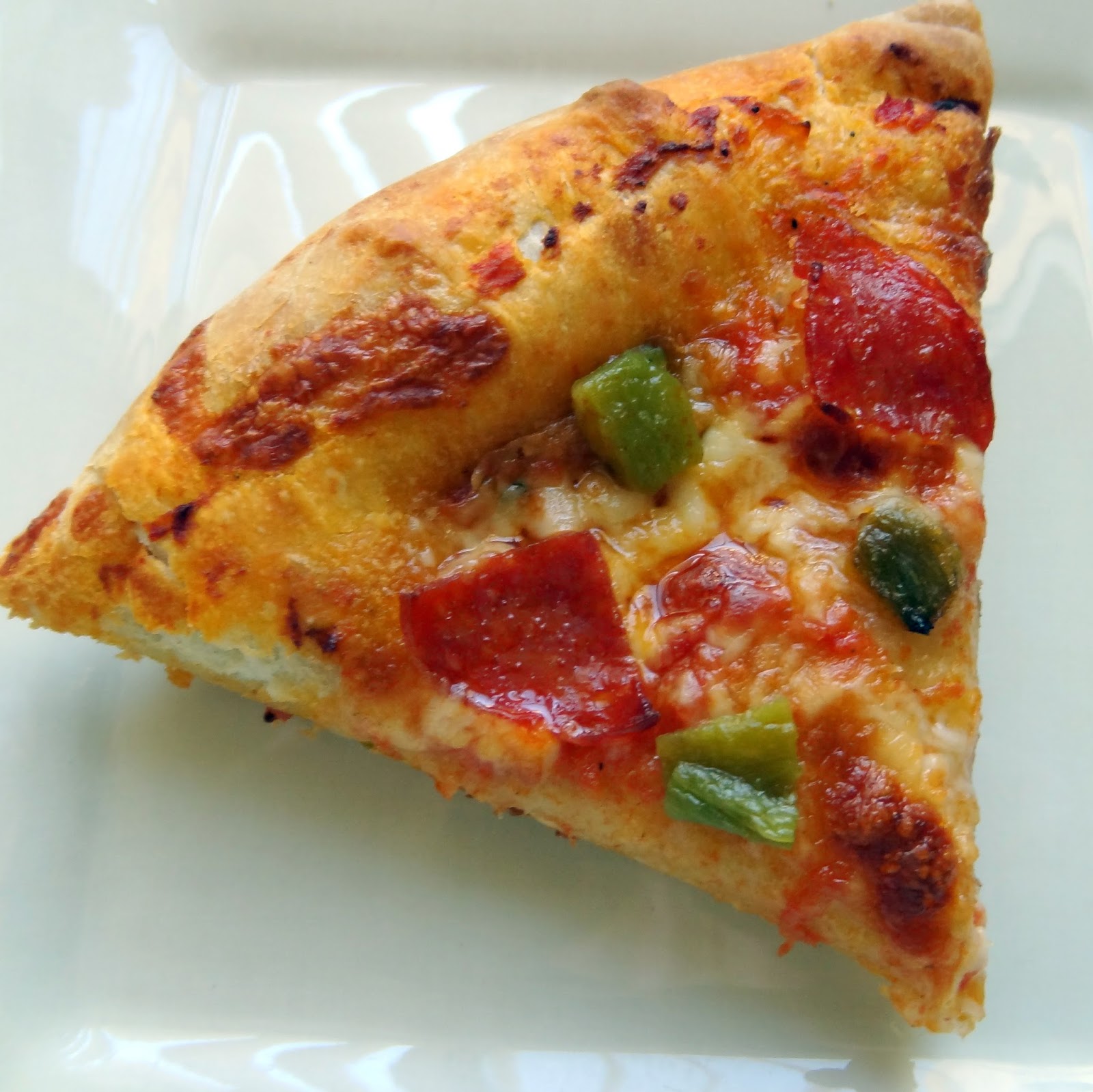
Hatch Chile Pepperoni Pizza

Check it out: my first time making pizza from scratch! I've been wanting to dive into the pizza-making world for the longest time, but anyone who follows this blog regularly knows my oven is capricious on a good day, homicidal on its worst. The oven doesn't even go up to 500°F that is usually recommended. I even bought a Boboli pre-made crust as emergency backup, that's how much I feared this endeavor.

But I had to try this combination of toppings. I have heard so much about delicious green chile pizzas in New Mexico I knew that it was worth a try to create at home, even with zero pizza skills. With Hatch chile season going strong, it was a man-up moment.

Of course, I had a little bit of trepidation with the dough. I obviously did not use nearly enough flour, made the rookie mistake of not picking the dough up and loosening it after spreading and before applying toppings, and as a result my pizza stuck rather badly to the sheet and my nice thin round pizza ended up being thick and crumpled because I needed a spatula to pry it off onto the pizza stone.

Also, I don't have a pizza peel, or even an rimless baking sheet. In fact, I have one baking sheet to my name, and I'm pretty sure it's older than me. So I flipped it over and used the bottom to spread my dough out. Which in retrospect was a dumb idea, because the 1" sides made it elevated above the pizza stone and my dough crumpled even more when transferring because of it, and the toppings fell off a bit.

I possibly shouldn't go on and on about my lack of pizza-making skills on my own blog. I should pretend that I wanted my pizza to look rustically handmade/asymmetrical and I wanted my pizza to have a thick crust.

Whatever. It still tasted amazing, and both the Bro-chi and Mr. Mochi were very impressed with my first attempt. The pizza was gobbled up in seconds, and I plan on stealing a rimless from my mother to perfect my technique. Just goes to show you can make a great tasting pizza that isn't very pretty, so don't fret if yours doesn't look perfect. If you're serving guests, just pretend that's what you were going for.

Tuesday, September 3, 2013

Hatch Chile and Smoked Cheddar Cornsticks

We're taking my Oklahoma Modern Choctaw Cornsticks a little Southwest! Hatch chile season is in full swing, just in time for grilling during this heat wave we've been getting here in Southern California. (My birthday was on Labor Day, and it was sweltering here!)

 Here's a little back story on Hatch chiles if you're not sure what the hype is about: Hatch chiles and New Mexican peppers, usually green, are actually the same as the Anaheim pepper found here in Southern California, but they are usually much hotter.  Hatch chiles are not actually a type of pepper, but simply named for being grown in the Hatch Valley, New Mexico. The hot days and cool nights make for a famously delicious group of chiles, but anyone in New Mexico will tell you that New Mexican peppers in general are special.

Most commonly, the peppers you see in the market are several different varieties of New Mexican green chile, which is how farmers can sell Hatch chiles by grouping them "hot, medium, and mild." Watch out, the hot varieties are hotter than jalapenos! Here's a list of cultivars developed by New Mexico State University.

You can google a list of roasting locations in your area, or pick them up fresh from the market. I was lucky enough to have a wonderful aunt that gave me two vacuum packs of freshly roasted flash frozen Hatch chiles!

Sunday, September 1, 2013

Caprese Sandwich

Like I mentioned in my caprese skewers post, I am wild about caprese. Insalata Caprese is my  favorite Italian dish, and I especially love the versions with balsamic vinegar. Actually, I'm really just a rabid cheese fan (a Wallace-style obsession) as well as a lover of vinegar and fresh tomatoes. I'm prone to eating any of the key ingredients plain by themselves, so this dish that combines them all was made for a person like me.

I have to say that the success of this dish hinges on having fantastic tomatoes. And since right now the farmer's markets have the end of season's tomatoes, I recommend you start assembling this sandwich before summer's end.