Image Map
Showing posts with label chili. Show all posts

Friday, February 10, 2017

So Cal-Style Taco Rice

Taco rice, also know as takoraisu (タコライス), is a bit of a strange dish. You can trace it back to the 1980s, where outside the American military base in Okinawa, restaurants created their own twist on Tex-Mex. Rather than using a tortilla, rice forms the base of this dish. The easiest way for me to describe it: taco rice is like a taco salad without the giant tortilla bowl. I can imagine cutting out the tortillas made it easier and cheap for the restaurants to make something filling for servicemen.

This dish is so popular in Okinawa, you can even find it at chains like KFC and Yoshinoya periodically as a special item! This is probably the most famous Okinawan food outside of Japan.

I love it because it makes a great dish for bentos and one-dish donburi. It also tickles me how many cultures this food passed through on its journey to invention. Tacos predate the Spanish, a truly indigenous dish of Mexico. The delicious and humble taco then jumped the border to America, who adapted it to the American palate and mass produced it with a hard shell, ground meat, and iceberg lettuce. Then it was brought to Okinawa, where the hard shell was discarded in favor of short grained rice. Mexican-American-Okinawan fusion? Nah, it's just good food, no labels needed.

How do I put my spin on it? By introducing some Southern California style! I couldn't resist adding some fresh guacamole, something you wouldn't see in an Okinawan diner due to the cost of avocados, but here in Orange County, avocados are practically on every dish.

Next, some heat! Taco rice typically is very mild, with no hot sauce at all. I couldn't help tweaking it to fit my palate, and I wanted something that made this dish quintessentially Orange County besides avocados. I grabbed a bottle of Gringo Bandito original hot sauce for the honor. It's made here in Orange County, and was created by the lead singer of the Offspring, Dexter Holland, an Orange County native.

It doesn't get more So Cal-stylish than that! But more than hailing from my home stomping grounds, the Gringo Bandito also brought the dish a nice heat and flavor I needed, without being too salty or vinegary. It's quickly become my go-to sauce for taco night!

My challenge to you: how will you make this dish your own?

Friday, November 25, 2016

Turkey Mole Stacked Enchiladas

I love Thanksgiving. It's my favorite holiday. I can't really pinpoint why it has always been my favorite holiday, even as a kid. It has always been more relaxing than other holidays, even now that help prepare a lot of the meal.

I guess now that I'm grown, I can say I love the fact that it's not religious and therefore very inclusive, not overly commercialized like Christmas or Valentine's Day, and finally I just love to cook.

And possible more than cooking, I love leftovers. It's serious business in my family. My mom hosts Thanksgiving just to get her hands on leftovers.

Sometimes however, you need a little variety in your leftovers. You need a little spice. Most of all, you need something quick and easy because you just did a marathon of cooking and you need a quick meal.

Enter in these leftover turkey mole stacked enchiladas. The flavor of these enchiladas is radically different from most traditional Thanksgiving fare, so it helps break the monotony of leftovers. You could make the mole sauce from scratch, but you just cooked a giant meal for your friends and family, so I think you deserve a tasty and easy meal by buying premade sauce.

Sunday, July 31, 2016

Yuzu Kosho Bloody Mary

I love a good Blood Mary. The often spicy tomato juice, the inventive garnishes, the endless variations, the fact it's socially acceptable to drink one any time of the day: there's nothing about it I don't love.

The Bloody Mary in recent years is enjoying a lot of popularity due to the gastropub's love of garnishing it with insanity. These are cocktails meant for Instagram: garnished with burgers, pizza slices, pickles, peppers, cheese, onion rings, french fries, even a whole fried chicken at one establishment. Check out this one from Wisconsin that may be the craziest I've ever seen.


So with a storied history of people fucking around with it, I thought the Bloody Mary could stand if I decided to create my own Bloody Mary with a hapa twist!

Considering that Worcestershire sauce, lemon, and salt are three main ingredients of a classic Bloody Mary, the taste profile isn't too different but still distinctly Japanese American. In my version, the tonkatsu adds a subtle sweetness and twang, the yuzu kosho brings the citrus heat, and of course I had to have some insane garnishes.

In keeping with the hapa theme, I garnished this one with Japanese tsukemono pickles, a SPAM musubi, a chicken katsu musubi, a crab Rangoon, and a celery stick to keep everything healthy.

Monday, July 25, 2016

Mizuna, Apple and Jicama Salad with Yuzu Kosho Vinaigrette

I don't post a lot of salad recipes. They generally aren't my favorite thing, especially when the lettuce leaves are huge and they end up slapping me in the chin and I get salad dressing everywhere and look like an idiot. I never claimed to be graceful, in fact I'm pretty much a walking disaster when it comes to food and a lot of other things now that I ponder it.

I've written about the chaos that ensues while making dishes, but I'm also a natural disaster whilst dining as well. Spaghetti and salads made with lettuce are a sure-fire way to ruin a blouse in my book. I rarely disappoint when it comes to this splattering, despite being a slow and careful eater. This trait seems to be genetic, as my father tends to involuntarily decorate his button-downs as well.

However, here's a salad that I'd be willing to wear white silk around because mizuna isn't nearly as ungainly on a fork as romaine or butter lettuce, especially when you chop it down to size. I mean, don't get me wrong, if anyone can make a mess of things it's me, but I'd at least take that challenge. My only other beef about salads: their names are often unwieldy as hell!

Yuzu Kosho

Yuzu Kosho is a powerhouse condiment and another specialty of Kyushu I wanted to share with you. A simple but inspired paste of yuzu zest, chili peppers, and salt, there are two types depending on whether red or green chili peppers were used.

My mother, who by the way I just realized doesn't have a nickname (Mama Mochi?), really fell in love with this condiment when we were served it with a hot pot dish. Being served as a condiment for nabemono, or hot pot cooking, is definitely the most traditional usage for yuzu kosho, but it is versatile and especially delicious as an ingredient in sauces for grilled meats or even salads.

As stated above, there are two types of yuzu kosho: green (ao) and red (aka). I happen to think the green is a bit sharper than the red, but I urge you to try them both and draw your own conclusions, as there doesn't seem to be a consensus on the difference between the two besides color. Both of them are a magical mixture of floral, spicy, citrusy notes that make wonder why every culture doesn't have a chili citrus paste in its repertoire.

Yuzu kosho is sold in very tiny quantities normally
This is a condiment that still isn't widely seen outside of hot pot restaurants, but it is having its moment, with publications like Bon Appetit and Saveur both publishing articles extolling its virtues with recipes in tow.

You'll find it at any well-stocked Japanese market, but it might take a bit of searching as it is generally purchased in a tiny little jar the photo on the right. This paste is normally dabbed on pieces of simmered hot pot ingredients, however it can be thinned and used to brighten up sauces or included in a marinade.

Marinate and grill a steak with it, make a spicy fresh vinaigrette, top fresh grilled seafood with it, spice up your noodles dishes, this condiment is so enlivening to so many dishes apparently it has even made its way into the arena of desserts!

Here's a list of recipes that include yuzu kosho on this site:
Mizuna, Apple, and Jicama salad with Yuzu Kosho Vinaigrette
Negima Nabe
Yudofu
Yuzu Kosho Bloody Mary

Wednesday, July 20, 2016

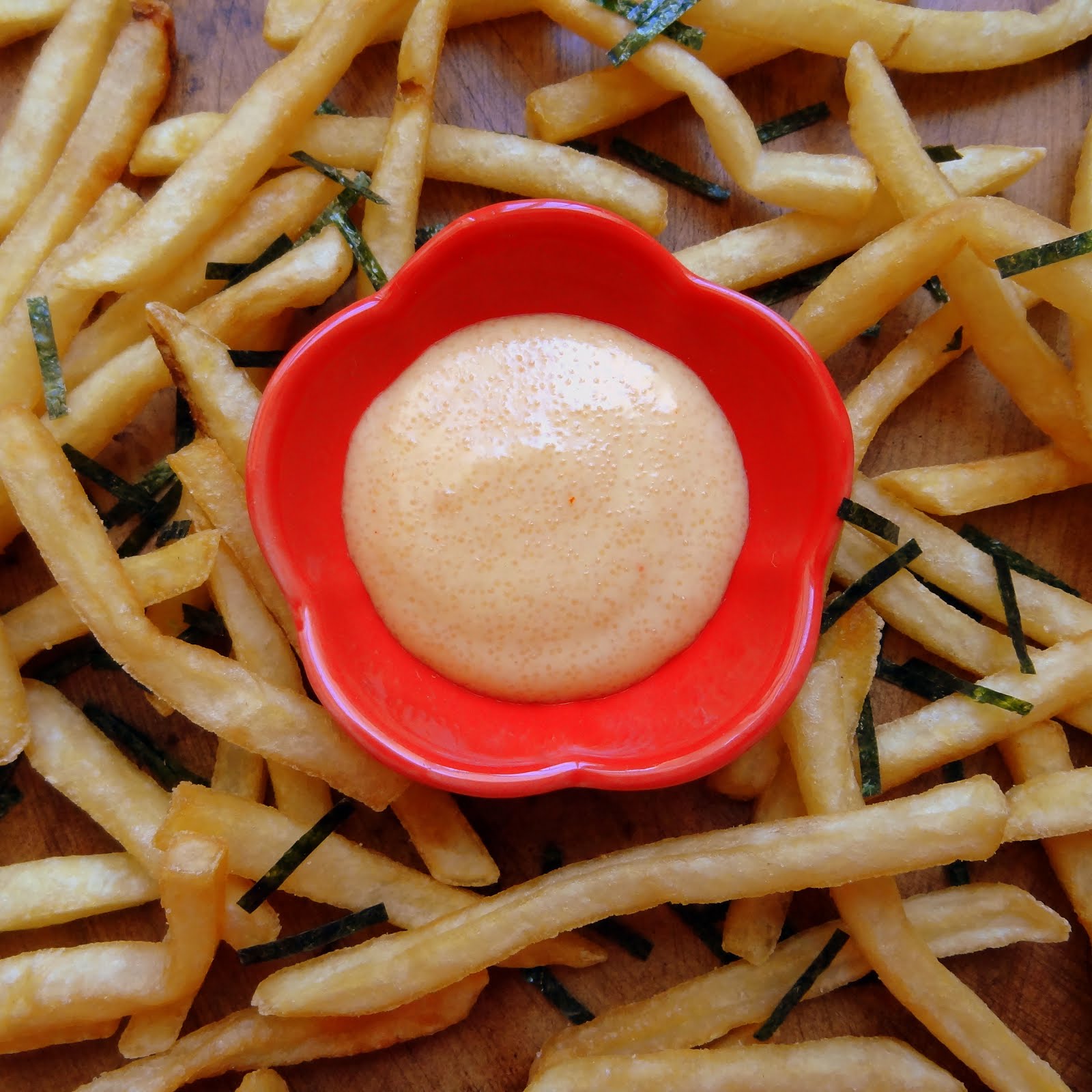
Fries with Mentaiko Mayo Dipping Sauce

Karashi Mentaiko (or usually just called mentaiko) is spicy marinated fermented fish roe (normally cod or pollock) that is a specialty of Kyushu that I introduced as part of my chronicle on my 2014 visit to Japan. Now you may be thinking that there's no way in hell I can marry American tastes with a Japanese product that is as funky, spicy, and fishy as mentaiko. Let me introduce you to my secret weapon: mentaiko mayo.

Mentaiko mayo takes the assertive fish roe and turns it into something creamy and delicious while still maintaining that zing and pop.

photo cred: Creamy Steaks
Mentaiko mayo is so popular there's even a mentaiko mayo Cheetos flavor in Japan, and I'm absurdly disappointed I have not seen or tried it (see here for a review) I love mentaiko mayo's versatility and I believe you will too. It's super easy to whip up, and once you do I think you'll find yourself spreading it on everything.

Some easy ways to enjoy it: spread it on top of baked salmon and broil to finish, mix it in with canned tuna instead of plain mayo for more of a pop, even smear it in a sandwich. But my favorite has to be as a dipping sauce for fries.

Mentaiko

Mentaiko, especially spicy karashi mentaiko, is a specialty of the Hakata ward in Fukuoka City. Mentaiko is fish roe (normally pollock) that is marinated in chili, sake, konbu and yuzu citrus, and then slightly fermented for several hours.

Karashi mentaiko is so popular that usually the term "mentaiko" refers to the type that is spicy, while "tarako" is the regular marinated roe.

Mentaiko is actually originally Korean, as is a lot of the ingredients and dishes that Kyushu is famous for as they are very close to Korea there in the southern regions of Japan.

Mentaiko can be seen traditionally served by itself as a side dish to sake.  It can be eaten raw or cooked (it turns a lighter pink when cooked) and either in its egg sac or removed.

This is how the eggs look removed from the egg sac membrane
One of the more traditional ways you will see it served is over rice with the egg sac intact, where it is often cooked with a bit of oil first. Another traditional use is as a filling for onigiri rice balls or topping sushi, however these days this flavor powerhouse isn't limited to just rice.

You'll find mentaiko incorporated with cream as a delicious pasta sauce, used as way to spice up egg omelettes, baked on top of french bread, mixed into potato salad, spread on top of skewers of chicken, and even as a topping for Japanese pizza! One crazy concoction I love is mochi baked with cheese and mentaiko for a gooey chewy savory-spicy mess.

Here in the states, you can find mentaiko at Japanese grocery stores like Mitsuwa and Marukai. It freezes fairly well, which is good because it's not cheap!

Recipes that use mentaiko:
Fries with Mentaiko Mayo Dipping Sauce

Friday, January 16, 2015

Taberu Rayu English Muffins

This is one of my infamous not-sure-if-it-even-counts recipes because there's really nothing to this recipe. It's more instructions of assembly than a true recipe, but that's the sort of thing I excel at. Some days even the microwave takes too long, you know?

It's no secret I've been in a funk lately. My nature tends towards introspection, analysis, and the esoteric on a good day. That's just the way I am. But sometimes my mind, which most people deem as a gift, lazily spirals into morbidity, melancholy, madness.

The most important thing for anyone to do is simply what they can do now, and not focus on what they could have done. You have to find happiness not tied to measurable things; happiness not tied to titles or success or how you stack up compared to other people. You have to just live.

So fuck it. Let's make some English muffins.

Tuesday, August 26, 2014

Taberu Rayu Cucumbers (きゅうりの食べるラー油)

It's hot here in Southern California, and the drought is so bad I'm almost afraid to do dishes. Rather than relying on fast food, chips and dip while it's too hot to cook, I'm brainstorming healthier, faster, and cooler options for a busy cook.

Like with my Togarashi Zucchini, this is a dish that is a snap to make, and is a great busy weeknight side to serve with something else prepared just as fast or pre-made. Even better, this recipe is a chilled side, which for late summer is a great treat!

This almost isn't a recipe it's that easy, but that also makes it easy to double or triple. It is also a great example of how easy and versatile taberu rayu is: making a super-tasty and healthy veggie side dish in minutes. You can turn cucumbers into a savory spicy powerhouse side with very little effort.

If you want to prep this ahead, chop the cucumber ahead of time and dress right before serving, that way if any water leeches off the cucumber in the fridge, you can drain it before adding the taberu rayu.

Friday, August 22, 2014

Taberu Rayu (食べるラー油)

To explain what Taberu Rayu (食べるラー油) is, I really have to back up and explain what rayu is. Rayu is sesame oil that has been infused with chilies until it is a nice glowing orange-red. It is delicious mixed with vinegar and soy sauce as a dip for gyoza and often seen in ramen shops that serve dumplings.

Taberu Rayu, on the other hand, starts with that same hot chili oil base, but it has crunchy bits in it. Minced fried garlic, fried onion bits, sesame seeds, even bits of almonds are included for a chunky crunchy condiment that can be spooned or mixed into just about anything. On top of ramen, spooned on a bowl of plain rice, even outlandish ideas like putting it on ice cream have surfaced in Japan.

Tuesday, July 15, 2014

Jalapeño Cheese Age-Gyoza (揚げ餃子 の ハラペーニョ チーズ)

Normally here in the United States, we'd call these "Jalapeño Cheese Wontons", but since these are inspired by Honda-ya's Cheese Age, I thought it appropriate to called them gyoza instead.

Izakaya Honda-ya is our go-to place for a cheap but satisfying night out. Late on a Monday or Tuesday normally doesn't draw a crowd, they don't mind us lingering and ordering sporadically throughout the evening.


One of our favorite indulgent dishes is their Cheese Age, which means "fried cheese" but is so much more and very crave-able.

Luckily for you, it's also very simple to make. With just four ingredients, and the ability to prep these ahead, these are a great party snack.

Age (pronounce ahh-gay) means "fried" in Japanese, so age-gyoza means simply "fried dumpling." I'm still working on my Japanese grammar and sentence structure, so feel free to correct me in the comments regarding the Japanese title.

Saturday, June 28, 2014

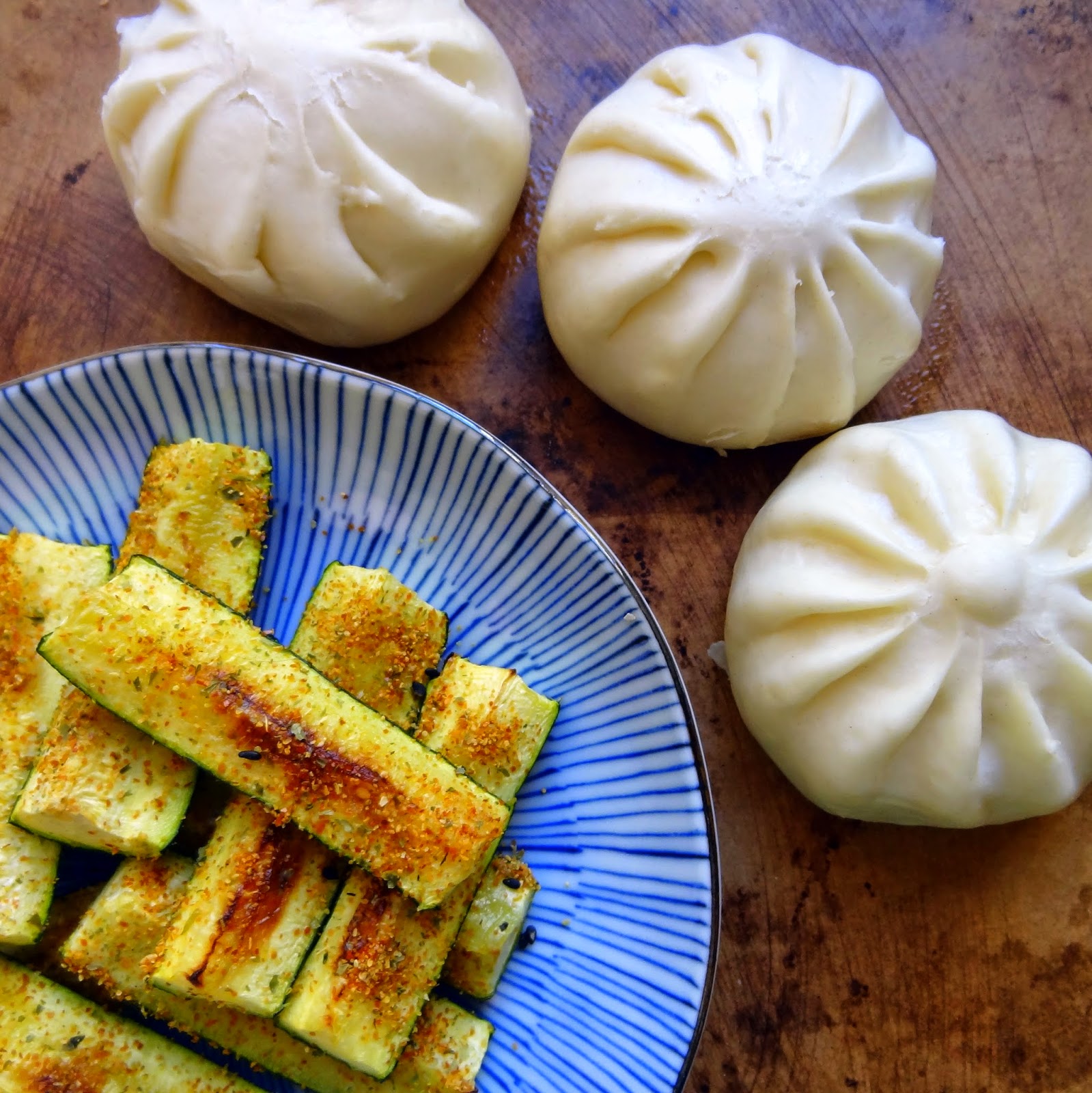
Togarashi Zucchini

I like creating simple recipes that take little time or effort to make. Sure, sometimes I mix things up with a more-involved recipe, but most of the time my ideas are ludicrously simple.

Like most of you, I'm willing to wager, I've got a Pinterest full of very ambitious ideas I really just don't have time for. But they are inspiring, and I love browsing through and finding these bloggers who invest some serious time into creating amazing things.


This blog isn't one of the ambitious ones. But I'd like to think it's one of the real ones.

I work full-time in a very physically and emotionally draining career. When you've had to wrestle an aggressive 130lbs dog and euthanize someone's childhood friend within 20 minutes of clocking in to your shift, it's hard at the end of the day to want to prepare anything for dinner.

Most workdays, I have to have dinner done in less than 10 minutes (including clean-up) or it just won't happen. Especially when I get off work at 9:30pm and have to be back at 7:30am.

Therefore I rely a lot on easy-to-make entrees, pre-made sides, and fresh veggies that require no preparation in order to get things on the table fast. Here's one of my go-to sides that requires
little-to-no clean up and is healthy to boot!

Sunday, February 16, 2014

Dogzilla

Another food truck that satisfies my love of hapa food: Dogzilla. I am always on a quest to try every crazy mash-up of Asian American cuisine Orange County has to offer. Kimchee quesadillas? Hell yes. Japanese hot dogs? I'm there! Red bean waffle sandwiches? You better believe I even dragged my friends there.

So when I first saw Dogzilla in a Best Buy parking lot, I knew I had to pounce on this one. Unlike a lot of the food trucks I'm in love with, Dogzilla is actually based in Irvine, rather than in L.A. county. And it offers up tasty treats to rival them too.

Dogzilla's tagline, "Not Your Typical Wieners" totally fits because you won't find any mustard or ketchup on their deluxe dogs. Instead, they rely on Japanese flavorings and Hawaiian stand-bys for their unique hot dogs. This isn't exclusive to Dogzilla, the hapa hot dog can be found at places like the Tokyo Doggie Style food truck in LA, Asia Dog in NYC, and Japadog in NYC and Vancouver. I even make a version at home (and why I haven't blogged about this? Fail!).

However trendy, I happen to really love the execution of Dogzilla's hot dogs. Rather than using a normal hot dog bun, they use King's Hawaiian hot dog buns. You can get a fried egg with a gloriously runny yolk on any dog. Their Garlic Fries feature freshly minced garlic rather than garlic powder, making my breath possibly radioactive but I could care less about that when they taste this good.

Thursday, January 9, 2014

Mexican Chocolate Chile Caramels

I don't really do New Year's resolutions, the whole "new year, new me" doesn't really hold with a person who would rather go back in time.

But I am trying to floss more, so there's something.

Mr. Mochi was kind enough to let me pick out my Christmas gift this year. I normally hate this practice, because I love surprises and I think gift giving is an art. But he wanted to get me a Le Creuset french oven but didn't want to get the wrong size.

I'm way too practical to let him spend the money on buying one at full retail, so I found a used one on eBay. After all, my favorite color is orange and it's not exactly the most popular color, so I had a hunch there's some clueless bride who got a giant heavy pot in neon orange for her wedding and has no clue what to do with it.

It's a little more beat up than I would like, nothing major but I'm a food blogger: that pot is going to have a lot of close-ups. However I'm proud to say we got the deal of a century.

Yes, I haggled for my own Christmas gift.

Speaking of Christmas gifts, once this baby arrived I couldn't help breaking it in by making a recipe that requires some even heating, so I made some caramels for Christmas gift-giving of my own: Mexican Chocolate Chile Caramels.

Saturday, November 10, 2012

Mexican Candy: Chile Mango Candies

Growing up in southern California, I was fortunate enough to be able to experience a myriad of different cultures. Not to mention the best thing about being a self proclaimed mutt is that growing up with so many tastes and textures means that rarely was I squeamish about a new food or cuisine.

So when the ice cream truck rolled down my grandmother's street, my brother and I were just as likely to pick a Mexican sweet as a popsicle. In fact, I was pretty obsessed with the Lucas Acidito Chili Powder, a salty tangy slightly hot powder that came in a little shaker with a duck on it. (Unfortunately, it was tested high for lead content in the late 2000s and subsequently pulled from the U.S. market. Lucas powders have been reformulated, and I bought some for my birthday in September and I can vouch that they are still delicious.)

My inspiration (pic credit Village Voice)
My tastebuds got a flashback when my coworker brought some Mexicandy back from her recent trip to Mexico. She plopped down a big ziplock of Vero Mango chili lollipops, tamarind pulp candy, and mazapan, and I was in heaven. The first lick of the lollipop brought me back to sitting on the curb outside Grandma's house. It's funny how food can do that to you.

So after my most recent foray into Mexicandy appreciation, I decided I had to make my own version. As tasty as those lollipops are, I happen to be lollipop challenged. I either somehow stab myself in the mouth or drool on myself while trying to do something two-handed with a sucker in my mouth. Therefore I wanted to make them without the stupid paper stick.

Thursday, September 6, 2012

New Mexican Green Chile Enchilada

Hatch chiles are here! These New Mexican peppers, usually green, are actually the same as the Anaheim pepper found here in Southern California, but they are usually much hotter.  Hatch chiles are not actually a type of pepper, but simply named for being grown in the Hatch Valley, New Mexico. The hot days and cool nights make for a famously delicious group of chiles, but anyone in New Mexico will tell you that New Mexican peppers in general are special. Most commonly, these peppers are a couple different varieties of New Mexican green chile with names like "Big Jim," which is how farmers can sell Hatch chiles by grouping them "hot, medium, and mild." The hot ones are hotter than jalapenos! Here's a list of cultivars developed by New Mexico State University.
I had fun finding the rare red ones!

My dad's side of the family is from New Mexico, and I remember getting big batches of roasted chiles and pecans from the family. So when I saw that the chiles were arriving from New Mexico, I just had to jump on this! I wanted to make something classic New Mexican, so what better than some enchiladas with green chile sauce? Like in my dad's recipe for enchiladas, these puppies are stacked like pancakes, not rolled.

Alien tomatoes!
You can vary the heat of the enchilada by the type of New Mexican chili pepper used. I made them with the mild/medium variety and Mr. Mochi and I unanimously agreed that next time we would use the hotter ones. The cheese and the milk do a good job taming the green chile, so don't be afraid of heat. And while red peppers do pop up in bushels of peppers, I suggest using the green ones so that way the color goes with the tomatillos.

Speaking of which, this green chile sauce uses tomatillos like the Mexican chile verde, a fruit I had never used before. They are members of the nightshade family just like tomatoes, but they are actually a closer relative of the cape gooseberry, which also has a husk that covers the fruit. They are acidic and tart, and are pretty weird to me for whatever reason (husks!). You peel off the husk, wash off the sticky residue on the skin, and chop them up, no need to peel or seed them.

Tuesday, May 15, 2012

Habanero Gold Quesadilla

I had a lot of questions regarding my Habanero Gold recipe, mainly what to use it on? I think it works delicious on a cheese plate, but I wanted to show you a quick way to use it in an entree.

I used leftover rotisserie chicken to make a quesadilla with some flour tortillas, cheddar cheese, and my jar of Habanero Gold. It lends a spicy sweet kick to the quesadilla that is an unexpected delicious twist! 


Habanero Gold Quesadilla

Simply spread a generous amount of the jelly on one burrito sized tortilla (about 2 ounces) and sprinkle cheese and shredded chicken on top. Place another tortilla on top and pan fry until cheese is melted.

See Also:
Mother's Day: Habanero Gold
New Mexican Style Enchiladas

Thursday, May 3, 2012

Mother's Day Habanero Gold


My mother used to grow lots of peppers in her garden.  Jalapenos, teeny tiny hot peppers, and most infamously, the habanero.  My mom's habaneros were giant blistering balls of sun just waiting to scorch anyone silly enough to try them.  Needless to say, the possums and skunks left them alone.  During a party as a very small kid, I ate a bite of habanero to impress the big kids who were crying over the wimpy little hot peppers. The first bite was pretty damn hot, but the second bite I hit a seed. I was too young for me to remember this, but apparently I started screaming bloody murder.  Enough stories like these, and even I am amazed I survived childhood without accidentally killing myself.

Tuesday, March 6, 2012

New Mexican Style Enchiladas

The funny thing about food and culture, is that unlike religion and language, I think food is the last thing someone gives up when moving to America. Most Japanese American kids who have never spoken Japanese or been exposed to Shintoism or Buddhism will happily dig into donburi bowls without realizing that it is something uniquely Japanese. Recently, I realized I have been doing this with traditional New Mexican food.

So while I cook a lot of Japanese, I am also aware that I have been influenced by other cultures as well. My father's side of the family is Native American and Caucasian and originally hail from the state of New Mexico and Oklahoma.

Thursday, February 23, 2012

Mapo Tofu: The Japanese Version

Mapo Tofu is actually a Chinese dish brought to Japan. This easy-to-make dish consists of ground meat and chunks of tofu enrobed in a spicy oily sauce flavored with fermented chili and soybeans.

Sometimes you will see mapo tofu by different names: mabo tofu or mabo doufu, but it's all the same thing.

Despite its Chinese origins, it is super popular in Japan. The original Chinese-style mapo tofu is blazing hot and complemented by the mouth-numbing effect of the sichuan peppercorns.

The Japanese-style is a bit more laid-back, a bit more umami than face-melting. I love how the nuttiness of the sesame oil takes on a funky fermented kick from the use of miso and fermented chili bean paste.

Picture courtesy of Amazon
This dish has become such a part of Japanese cusine you can even buy the sauce in pouches almost like Hamburger Helper with a helpful slogan "Just add tofu and ground meet!" emblazoned upon it. Even if you buy the "hot" version it is still laughably mild.

If you're craving the spicy Sichuan Mapo Tofu, I recommend checking out these recipes (here and here) by mapo tofu aficionados.