Image Map
Showing posts with label hapa pantry. Show all posts

Friday, December 2, 2016

Kamaboko Dip

It's officially the holidays! Parties, potlucks, girlfriend get-togethers: I've got all that and more planned for the coming weeks, so you'll see a bit of a shift in the recipes I feature here.

There's a distinct lack of baking projects, recipes for parties, or appetizers for a crowd. I like small dishes, and this blog started as a way to feature what I cook on weeknights for myself and Mr. Mochi, and I don't deviate too often unless it is to make sure I write down one of my mother's recipe.


But with the holidays upon us, please look forward to some party dishes! First up: Kamaboko Dip!

I've made several dishes on this blog that feature kamaboko, but all of them have been pretty traditional Japanese recipes. So I wanted to showcase how we utilize it differently it as hapas and Japanese Americans here in the states. Of course I am sure you can think of plenty examples of where imitation crab (kanikama) is substituted for real crab. But here's an entirely new presentation for kamaboko.

Thursday, December 1, 2016

Kamaboko (蒲鉾) and Other Surimi Products

Kamaboko (蒲鉾) is a Japanese ingredient made from white fish that have been pureed, mixed with flavorings, and then steamed to form a steamed fish cake.

Traditionally, kamaboko was formed on a wooden board for steaming which produces the hallmark half-moon shape you see it in.


Nowadays you can find kamaboko without the wood, but most varieties will still be steamed on wood.
Imitation crab sticks work great for cheap sushi

Does this sound totally weird? I wish I could have described it more appetizingly. However, the pureed white fish, called surimi, is the same process that is used to make imitation crab (called kanikama, which is short for kani-kamaboko). So if you've enjoyed a california roll, you've had surimi. The biggest difference between imitation crab and kamaboko is just the texture as kamaboko is chewier and firmer.

Sunday, July 31, 2016

Yuzu Kosho Bloody Mary

I love a good Blood Mary. The often spicy tomato juice, the inventive garnishes, the endless variations, the fact it's socially acceptable to drink one any time of the day: there's nothing about it I don't love.

The Bloody Mary in recent years is enjoying a lot of popularity due to the gastropub's love of garnishing it with insanity. These are cocktails meant for Instagram: garnished with burgers, pizza slices, pickles, peppers, cheese, onion rings, french fries, even a whole fried chicken at one establishment. Check out this one from Wisconsin that may be the craziest I've ever seen.


So with a storied history of people fucking around with it, I thought the Bloody Mary could stand if I decided to create my own Bloody Mary with a hapa twist!

Considering that Worcestershire sauce, lemon, and salt are three main ingredients of a classic Bloody Mary, the taste profile isn't too different but still distinctly Japanese American. In my version, the tonkatsu adds a subtle sweetness and twang, the yuzu kosho brings the citrus heat, and of course I had to have some insane garnishes.

In keeping with the hapa theme, I garnished this one with Japanese tsukemono pickles, a SPAM musubi, a chicken katsu musubi, a crab Rangoon, and a celery stick to keep everything healthy.

Shochu

Shochu is a distilled liquor made in Japan, originating from the Kyushu area. Shochu remains popular in that area, in fact the area is unique in that shochu is more popular than sake unlike the rest of Japan.

Sometimes you may hear it called "Japanese vodka" which is a really simplistic way of getting us to understand what it is, however there are a lot of key differences that make shochu unique. In comparison to vodka and other hard liquror's 45% alcohol, shochu is normally around 25% alcohol. Also, vodka and other hard liquors are normally distilled several times while shochu is often distilled only once. This allows the ingredients the shochu was made with to really shine through and allows for variation of taste. When it is single distilled, the shochu is called honkaku, when it is distilled more, it is called korui.

(L) barley; (R) sweet potato
For instance, Satsuma hokaku shochu (shown above) is made with sweet potatoes and the taste and aroma are stronger than other varieties. The taste can even be described as slightly smokey, like a whiskey. Other types of shochu may be made with rice, barley, sugar, and even soba. When it is made in the korui style, the alcohol level is higher (still lower than vodka) and becomes very clean and light tasting but without the nuances and aroma of honkaku single distilled varieties.

Traditionally, shochu is enjoyed neats, on the rocks, or diluted with hot water to allow the aroma to be enjoyed.

This Takara shochu is korui-style and very smooth
More recently, the Chūhai (チューハイ) cocktail has become a popular use of shochu. Chūhai, which is a portmanteau of "shochu" and "highball," combines shochu with carbonated water and lemon. This cocktail, low in alcohol and high in calories, now has tons of flavors: lychee, white peach, oolong, ume, yuzu, orange, grapefruit, and grape just to name a few that I have come across. I like the fact you can drink them without getting drunk as they are very low alcohol usually. Too bad it has so much sugar!

In my recipes, I usually use korui-style shochu, like shown in my umeshu recipe. I find korui shochu to be way smooth, less harsh tasting than vodka and the lower alcohol content keeps me from getting sick since I am sensitive to alcohol.

Recipes that use shochu:
Umeshu
Ichigoshu
Yuzu Kosho Bloody Mary

Monday, July 25, 2016

Yuzu Kosho

Yuzu Kosho is a powerhouse condiment and another specialty of Kyushu I wanted to share with you. A simple but inspired paste of yuzu zest, chili peppers, and salt, there are two types depending on whether red or green chili peppers were used.

My mother, who by the way I just realized doesn't have a nickname (Mama Mochi?), really fell in love with this condiment when we were served it with a hot pot dish. Being served as a condiment for nabemono, or hot pot cooking, is definitely the most traditional usage for yuzu kosho, but it is versatile and especially delicious as an ingredient in sauces for grilled meats or even salads.

As stated above, there are two types of yuzu kosho: green (ao) and red (aka). I happen to think the green is a bit sharper than the red, but I urge you to try them both and draw your own conclusions, as there doesn't seem to be a consensus on the difference between the two besides color. Both of them are a magical mixture of floral, spicy, citrusy notes that make wonder why every culture doesn't have a chili citrus paste in its repertoire.

Yuzu kosho is sold in very tiny quantities normally
This is a condiment that still isn't widely seen outside of hot pot restaurants, but it is having its moment, with publications like Bon Appetit and Saveur both publishing articles extolling its virtues with recipes in tow.

You'll find it at any well-stocked Japanese market, but it might take a bit of searching as it is generally purchased in a tiny little jar the photo on the right. This paste is normally dabbed on pieces of simmered hot pot ingredients, however it can be thinned and used to brighten up sauces or included in a marinade.

Marinate and grill a steak with it, make a spicy fresh vinaigrette, top fresh grilled seafood with it, spice up your noodles dishes, this condiment is so enlivening to so many dishes apparently it has even made its way into the arena of desserts!

Here's a list of recipes that include yuzu kosho on this site:
Mizuna, Apple, and Jicama salad with Yuzu Kosho Vinaigrette
Negima Nabe
Yudofu
Yuzu Kosho Bloody Mary

Friday, July 22, 2016

Mizuna (水菜)

Mizuna (水菜) is a green that you will see called by a lot of different names here in the states: Japanese mustard, potherb mustard, even California peppergrass or the wildly ambiguous "Japanese greens." I like sticking to the name Mizuna because I think those other names are a bit misleading. Mizuna isn't that peppery and it's certainly not mustardy despite being in the mustard family. The name "mizuna" literally means "water greens" which refers to its juicy stems.

I'd peg the taste of mizuna as plesantly crisp, very mildly peppery (much less than arugula), with a bit of earthiness in the leaves. I'm not a fan of frisee or arugula because they tend to overwhelm so many other flavors, but I find mizuna to have just enough kick and bitterness for me. I also love that you can use the stems just as well as the leaves in most dishes without trimming as they are just as mild as the leaves.

Actually, you've probably already eaten mizuna and just not realized it! Baby mizuna is a popular green to be in a mesclun or spring salad mixture. Especially here in California, you can often find baby mizuna alongside other greens in a mixed salad.

Feel free to use those juicy stems! They aren't overly bitter at all!
In Japanese cooking, you will find mizuna most commonly pickled, simmered, or added to a hot pot dish rather than a salad. Now if you ever come across a recipe for a cooked mizuna dish and it seems like they got the amount wrong--they couldn't possibly mean to add that much in--don't worry as it cooks down quite a bit.

It is a very cool weather friendly plant, which is why you will see it added to a lot of hot pots. Especially in the winter months when you crave a hot pot, traditionally there weren't a lot of leafy greens to choose from.

How to use mizuna? Any way you would use arugula you can substitute mizuna (especially if you're like me and think arugula is a little too feisty sometimes). Try some tossed with balsamic vinaigrette, strawberries, crumbled feta and walnuts for a salad, or sauteed like spinach next to a roast. My mother likes to sneak all sorts of homegrown greens into her sandwiches, so I often stuff some into my Caprese Sandwich recipe. I think a BMT (bacon, mizuna, tomato) would be equally delicious!

Recipes that feature mizuna:
Ozoni
Mizuna, Apple, and Jicama salad with Yuzu Kosho Vinaigrette 
Caprese Sandwich

Wednesday, July 20, 2016

Mentaiko

Mentaiko, especially spicy karashi mentaiko, is a specialty of the Hakata ward in Fukuoka City. Mentaiko is fish roe (normally pollock) that is marinated in chili, sake, konbu and yuzu citrus, and then slightly fermented for several hours.

Karashi mentaiko is so popular that usually the term "mentaiko" refers to the type that is spicy, while "tarako" is the regular marinated roe.

Mentaiko is actually originally Korean, as is a lot of the ingredients and dishes that Kyushu is famous for as they are very close to Korea there in the southern regions of Japan.

Mentaiko can be seen traditionally served by itself as a side dish to sake.  It can be eaten raw or cooked (it turns a lighter pink when cooked) and either in its egg sac or removed.

This is how the eggs look removed from the egg sac membrane
One of the more traditional ways you will see it served is over rice with the egg sac intact, where it is often cooked with a bit of oil first. Another traditional use is as a filling for onigiri rice balls or topping sushi, however these days this flavor powerhouse isn't limited to just rice.

You'll find mentaiko incorporated with cream as a delicious pasta sauce, used as way to spice up egg omelettes, baked on top of french bread, mixed into potato salad, spread on top of skewers of chicken, and even as a topping for Japanese pizza! One crazy concoction I love is mochi baked with cheese and mentaiko for a gooey chewy savory-spicy mess.

Here in the states, you can find mentaiko at Japanese grocery stores like Mitsuwa and Marukai. It freezes fairly well, which is good because it's not cheap!

Recipes that use mentaiko:
Fries with Mentaiko Mayo Dipping Sauce

Sunday, August 23, 2015

Bacon Wrapped Mochi (餅の豚巻き)

I love mochi.

I've written odes to mochi.

My last meal on earth would involve mochi. Possibly several courses of mochi.

I love mochi stuffed with red bean paste, flavored with purple sweet potatoes, baked with coconut, stuffed with fresh fruit, grilled until puffy and covered in soy sauce, stuffed with peanut butter, covered in chili paste, served with boy chok and beef...

I've yet to meet a mochi I didn't love.

Mochi and I understand each other on a deeper level.

If you've only tried mochi when it is either A) filled with ice cream or B) as a topping for frozen yogurt, you are missing out. If you've never had a savory dish that included sticky rice cakes, you are a poor poor soul.

Here's an easy-to-make, easy-to-love recipe for a savory mochi snack. I was inspired by my recent trip to the 626 Night Market, where Nani Kore Hawaii had huge skewers of Korean mochi wrapped with paper-thin bacon for sale. Mine certainly upped the meat to mochi ratio!

Friday, January 16, 2015

Taberu Rayu English Muffins

This is one of my infamous not-sure-if-it-even-counts recipes because there's really nothing to this recipe. It's more instructions of assembly than a true recipe, but that's the sort of thing I excel at. Some days even the microwave takes too long, you know?

It's no secret I've been in a funk lately. My nature tends towards introspection, analysis, and the esoteric on a good day. That's just the way I am. But sometimes my mind, which most people deem as a gift, lazily spirals into morbidity, melancholy, madness.

The most important thing for anyone to do is simply what they can do now, and not focus on what they could have done. You have to find happiness not tied to measurable things; happiness not tied to titles or success or how you stack up compared to other people. You have to just live.

So fuck it. Let's make some English muffins.

Friday, August 22, 2014

Taberu Rayu (食べるラー油)

To explain what Taberu Rayu (食べるラー油) is, I really have to back up and explain what rayu is. Rayu is sesame oil that has been infused with chilies until it is a nice glowing orange-red. It is delicious mixed with vinegar and soy sauce as a dip for gyoza and often seen in ramen shops that serve dumplings.

Taberu Rayu, on the other hand, starts with that same hot chili oil base, but it has crunchy bits in it. Minced fried garlic, fried onion bits, sesame seeds, even bits of almonds are included for a chunky crunchy condiment that can be spooned or mixed into just about anything. On top of ramen, spooned on a bowl of plain rice, even outlandish ideas like putting it on ice cream have surfaced in Japan.

Saturday, June 28, 2014

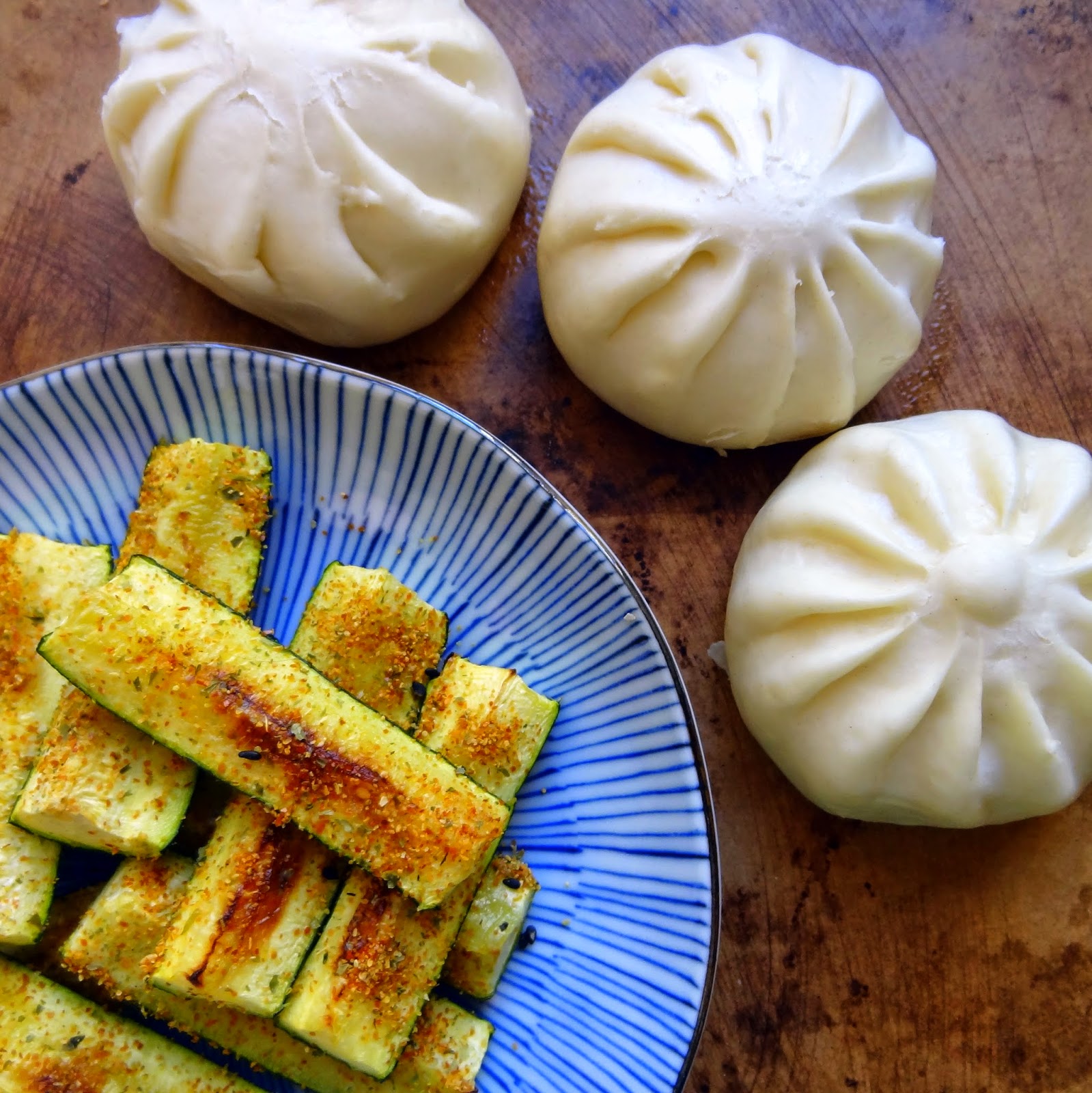
Togarashi Zucchini

I like creating simple recipes that take little time or effort to make. Sure, sometimes I mix things up with a more-involved recipe, but most of the time my ideas are ludicrously simple.

Like most of you, I'm willing to wager, I've got a Pinterest full of very ambitious ideas I really just don't have time for. But they are inspiring, and I love browsing through and finding these bloggers who invest some serious time into creating amazing things.


This blog isn't one of the ambitious ones. But I'd like to think it's one of the real ones.

I work full-time in a very physically and emotionally draining career. When you've had to wrestle an aggressive 130lbs dog and euthanize someone's childhood friend within 20 minutes of clocking in to your shift, it's hard at the end of the day to want to prepare anything for dinner.

Most workdays, I have to have dinner done in less than 10 minutes (including clean-up) or it just won't happen. Especially when I get off work at 9:30pm and have to be back at 7:30am.

Therefore I rely a lot on easy-to-make entrees, pre-made sides, and fresh veggies that require no preparation in order to get things on the table fast. Here's one of my go-to sides that requires
little-to-no clean up and is healthy to boot!

Monday, January 13, 2014

So-su (ソース)

So-su is the Japanese version of Worcestershire sauce, most people here in the states probably know this as "Tonkatsu Sauce" or even just "Bulldog Sauce" as a proprietary eponym (definition). I've heard that it is most similar to HP sauce or A1 Steak Sauce. I haven't tried either of those so I can't personally vouch for those claims. However, it kinda makes sense that HP sauce would be similar, because all of so-su is derived from British influence on Japanese cuisine. Japanese Worcestershire sauce is consider "youshoku" or an item of western-influenced cuisine cuisine.

Where do you usually find so-su? On top of okonomiyaki, tonkatsu, Japanese-style hamburger, yakisoba, and takoyaki, to name a few.

There's actually several different types of so-su, based on how thick it is. "Usuta so-su" is thinnest and most similar to the Worcestershire sauce that the British invent and Americans are familiar with, and the "tokuno or tonkatsu so-su" is very thick and is sweeter and less tangy than the usuta variety. The third is "chuno so-su" which is almost like a blend of the two styles: viscosity in between the other two styles, with a mix of tanginess and fruity sweetness. The type most familiar around the world would be the thickest sauce, the tonkatsu sauce.

Tuesday, July 9, 2013

Kouri Zatou (氷砂糖)

Here's a short post for The Hapa Pantry: Kouri Zatou (氷砂糖)!

Kouri zatou, "rock sugar" is an ingredient used in making infused liqueurs in Japan, like umeshu. Rock sugar is ideal for this because it dissolves slowly; if the sugar dissolved too fast, it would take longer for the fruit to infuse into the liquor.

Kouri zatou is also a pretty neutral sweetener that allows for the flavor of the fruit to shine through. More assertive sweeteners like honey and black sugar will obviously make the finished product taste different.

Monday, July 8, 2013

Itawasa (板わさ)

It's been so hot recently, I need a break from cooking. Everything becomes an unwanted source of heat: the oven, the stove, even the toaster. So I decreed it was time to bust out some easy eats that were sans-heat.

Also, sometimes my blog amazes me, in that some of the simplest stuff I haven't shared with you. Itawasa has to be one of the simplest dishes to try and make at home!

Itawasa is slices of kamaboko served in the same fashion as sashimi-- very simply with shoyu and wasabi.

I have way too much fun with wasabi
I'm infamous for these food ideas that you can barely call a recipe, but I still wanted to bring this idea to you as it is a great way to experience kamaboko.

This is also a fantastic way to experience and experiment with different soy sauces. Because kamaboko is sweet and mild flavored, this is the time to really try out all those funky artisanal soy sauces you've seen but haven't had a chance to try.

Friday, March 1, 2013

Mugicha (麦茶)

Sometimes we need a break from sugary drinks, especially in this heat wave. I know that I, for one, could always work on reducing my caloric intake and it's amazing how many calories we consume in the form of drinks. I'm also wary of diet sodas, not to mention that most artificial sweeteners are an acquired taste. I don't particularly like soda anyways, it's not thirst-quenching enough for me, but water can get boring. My western go-to drink is unsweetened iced tea or what's called an Arnold Palmer: iced tea and lemonade mixed together.

I love tea, but sometimes you need some variety, and sometimes you don't need to stay awake all night because you chugged a liter at dinner. That's where Mugicha comes in!

Wednesday, December 5, 2012

Kirimochi/Marumochi

Most people are familiar with the squishy fresh mochi that surrounds ice cream. Available at Trader Joe's and every American sushi restaurant, this is usually an American's first introduction to mochi. The first time I brought mochi in for my coworkers, they were puzzled and asked me if it was real mochi, because there was no ice cream! Nowadays, they might experience mochi topping their frozen yogurt at Pinkberry and Yogurtland.

Going into a Japanese confectionery, you will see rows and rows of sweet wagashi, traditional Japanese sweets. Lightly sweetened mochi is colorful or resplendent in its natural creamy white sheen, plumped up with fruits or azuki bean paste called anko. Japanese American versions sometimes even have peanut butter in them! My favorite as a kid was the plain mochi with the pink orange and green stripes on them.

As wonderful as dessert mochi is, most of you will be surprised that there is savory mochi! Mochi without any added sweeteners, it is used in a variety of dishes, including soups.

Japanese stores sell savory mochi, dried and hard, called kirimochi and is used in the Eastern/Northern areas in Japan. A round version is called marumochi, which is popular in the Southern parts. Here in Southern California, they stock both version.

To use kirimochi, you can drop it in hot water until softened, boil it, fry it, grill it, deep-fry it, or even microwave it. It is very versatile.
Marumochi and Kirimochi

To substitute for sweet mochi used in recipes like Ichigo Daifuku:
3 kirimochi blocks
3 tbs sugar
3 tbs water

Place mochi, sugar, and water into a small microwave bowl and cover tightly with saran wrap. Heat on medium power for 3 minutes. Stir until the water is completely combined. Tada! Sweet mochi dough.

Recipes that use kirimochi:
Yakimochi 
Ozoni 
Kinako Mochi 
Bacon Wrapped Mochi 

Tuesday, October 16, 2012

Dashi

Shaved dried bonito is one of the main ingredients of dashi*
Dashi is one of the pillars of Japanese cooking, rubbing shoulders with shoyu and mirin as an essential of the Japanese pantry. It is a stock made from dried bonito tuna and sea kelp that helps infuse Japanese cuisine with umami, and forms the base for almost all Japanese broths and soups.

It is used in miso soup, simmered dishes, noodle dipping sauces, even omelets, to impart a simple savoriness. Dashi is one of the foundations of Japanese cusine, like béchamel to the French and salsa to Latino cooking. To me, it is like homemade poultry stock; so simple yet nuanced in flavor. And unlike homemade chicken stock, it is super easy and fast to make from scratch.

I've got the little jar of Hondashi in my fridge*
The most common type of dashi is the aforementioned kombu (sea kelp) and katsuobushi (dried skipjack tuna flakes) combination, but there are also vegetarian version that use kombu or shiitake mushrooms, as well as versions using dried baby sardines.

Nowadays, even in Japan, it is more common to use dashi granules than making it from scratch. These granules are usually stronger flavored than traditional dashi, and depending on the quality, can have harsh tastes of salt and MSG.

I won't lie and say that I always make my dashi from scratch. We all know by now that I am hilariously to-a-fault lazy. Come on, I made the KFC Katsu Kare Donburi and even blogged about it. But really, making dashi is easy and cheap, and the best thing is the ingredients to make it last a long time if stored properly and it is really simple to make.

Friday, August 3, 2012

Shoyu (醤油)

You might think that soy sauce needs no post. True, shoyu is present at every asian food restaurant, ubiquitous everywhere from Panda Express to your favorite sushi joint. But there are a lot of different types of soy sauces, and I'm here to tell you about them.

First, a little bit about shoyu in general.  Shoyu was first reported to be used in China in 2000 BC, and spread to Japan in the 7th century along with Buddhism. It is the liquid product of fermented soy beans, wheat, salt, water, and some sort of yeast to get the fermentation going.  The fermented mix is squeezed and the run off is soy sauce, which gets aged then bottled. Nowadays, there is also a chemical process involving acid-hydrolyzed soy proteins that I won't even pretend to understand, other than that the whole soy bean is not used so it ferments faster and is used in most mass produced soy sauce.

Now there are tons of different types of soy sauce, as every country has its own way of making it. For example, a type of Indonesian soy sauce is thick like molasses, and in Brazil they use corn rather than wheat as the grain. But let us talk about the Japanese styles, since those are the ones I use in my pantry.

Wednesday, July 18, 2012

Mirin (味醂)

Mirin is another essential in Japanese cooking, and part of any hapa's pantry. A sweet rice wine with a relatively low alcohol, mirin is sometimes with almost 50% sugar.  Mirin was first produced in the 16th century as a sweet drinking wine from a mixture of fermented rice grains. Nowadays it is much sweeter and thicker than what was first used for drinking.  I've taken a swig, and I can't imagine lingering over a glass of modern mirin. Today it is used exclusively for cooking.

Pale golden yellow, mirin is used to provide sheen and sweetness to seafood as well as remove the overt fishy odor.  It is essential in homemade teriyaki sauce, where its sweetness and sugar content make for a perfect glaze. A facsimile can be made with sugar and sake, which also gives you an idea of what it tastes like. Mirin can be confusing when it is labeled as "cooking sake" because in some dishes you use both sake and mirin.

If you have mirin at home, go grab it and look at the ingredient list. Chances are you don't have mirin at all, but mirin-fu chomiryo which means "mirin-like seasoning." The usual suspect's ingredient list: corn syrup, high fructose corn syrup, water, fermented rice seasoning, vinegar, and less than 1% of sodium benzoate as a preservative.

I'll pause to let you get your Munch on.

Monday, June 18, 2012

Shichimi Togarashi

While I was reviewing my earlier posts, I realized I mentioned shichimi togarashi but didn't discuss it, even using it in my katsu-karē and spam musubi.  Like shiso and shiso katsuo ninniku, it is something that I consider pantry staples but might not be as ubiquitous as I think it is. Sounds like a perfect blog post to me!


My bottle of House brand
Shichimi togarashi (七味唐辛子) is a common Japanese spice blend, commonly made out of ground red chili pepper, black and white sesame seeds, ground sansho (Szechuan pepper), orange peel, nori, ginger, and sometimes hemp seed. The name shichimi togarashi means "seven flavor chili pepper" because traditionally it contains seven ingredients, as opposed to ichimi togarashi (一味唐辛子), which is just one ingredient: ground red chili pepper ("ichi" = "one").